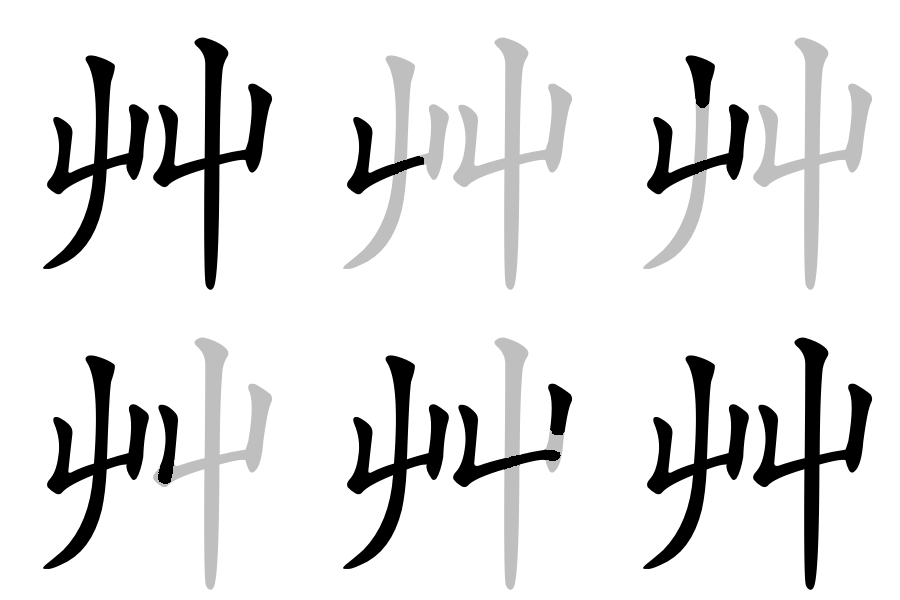
艸
- grass, herb;
It representing the general category of herbaceous plants.
Etymology
Usage in Korean
艸 is considered a somewhat unfortunate character because it has largely been replaced by 草 in regions like Taiwan.
In Japan, regardless of whether the old (kyūjitai) or new (shinjitai) forms are used, 草 is the standard character, and 艸 is not even included in the list of commonly used kanji (jōyō kanji).
Thus, 艸 is rarely used independently today.
Alternative forms
Characters with 艸
9 strokes
- 苑–royal garden, imperial park
- 苛–harsh, severe, cruel, oppressive
- 若–to be like, to resemble, if, as though
- 苦–suffering, pain
- 英–flower, corolla (the petals of a flower), outstanding, excellent
- 茫–vast, boundless, indistinct, dim
- 茶–tea, tea plant (Camellia sinensis), tea leaves
- 荒–wasteland, uncultivated land, desert
10 strokes
11 strokes
12 strokes
13 strokes
14 strokes
15 strokes
16 strokes
17 strokes
- 蓼–smartweed, knotweed, water pepper (genus Persicaria / Polygonum)
- 蔘–ginseng
- 蔚–name of a place, especially Ulsan (蔚山) in Korea, mugwort / wormwood, to flourish, luxuriant growth
- 薄–thin, light, slight (physical thickness)
- 薪–firewood, kindling, fuel, salary
- 藏–to hide, to conceal, to store, to preserve, a repository, treasury, storehouse
18 strokes
19 strokes
21 strokes
艸
풀
초
pul
cho
Kangxi radical:140
Strokes:6
Unicode:U+8278
Cangjie input:
- 山山 (UU)
- 難山山 (XUU)
Composition:
- ⿰ 䶹 屮

The content on this page provided under the CC BY-NC-SA license.