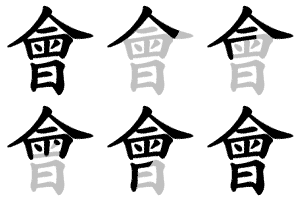
會
- to gather, to meet, to assemble;
Etymology
There are three major theories about the origin of 會.
1️. Food vessel theory (originally meant sashimi):
亼 (lid) + 曰/口 (bowl/dish) + meat depicted in between.
Originally depicted a dish of raw fish or meat (膾). Later it was borrowed for the idea of gathering.
2️. Cooking pot theory:
Depicts a pot with lid and ingredients inside – leading to the meaning “to collect/put together,” which evolved into “to gather.”
3️. Assembly theory (phonetic/semantic blend):
亼 (gather) or 人 (people) + abbreviated form of 曾 (often seen in early scripts) meaning “again/repeatedly,” representing the coming together of people.
Semantic development:
- physical gathering;
- meeting or assembly;
- association or society;
- ability / understanding;
- future, auxiliary verb (modern Mandarin).
Usage in Korean
회의 (會議) — meeting
사회 (社會) — society
집회 (集會) — assembly
기회 (機會) — opportunity
이해하다 (理解하다) — to understand (related semantic layer)
Additional notes
會 emphasizes:
- purposeful coming together;
- mental convergence (understanding);
- organized assembly.
It bridges social gathering + cognitive understanding.
Related characters:
集 — gather
聚 — assemble
合 — combine
議 — discuss
社 — society
Classical usage:
群英會 — “Assembly of heroes.”
會當凌絕頂 (杜甫) — “One must climb to the summit.”
相會於此 — “Meet here.”
- 人一田日 (OMWA)
- ⿱ 亼 𭥴