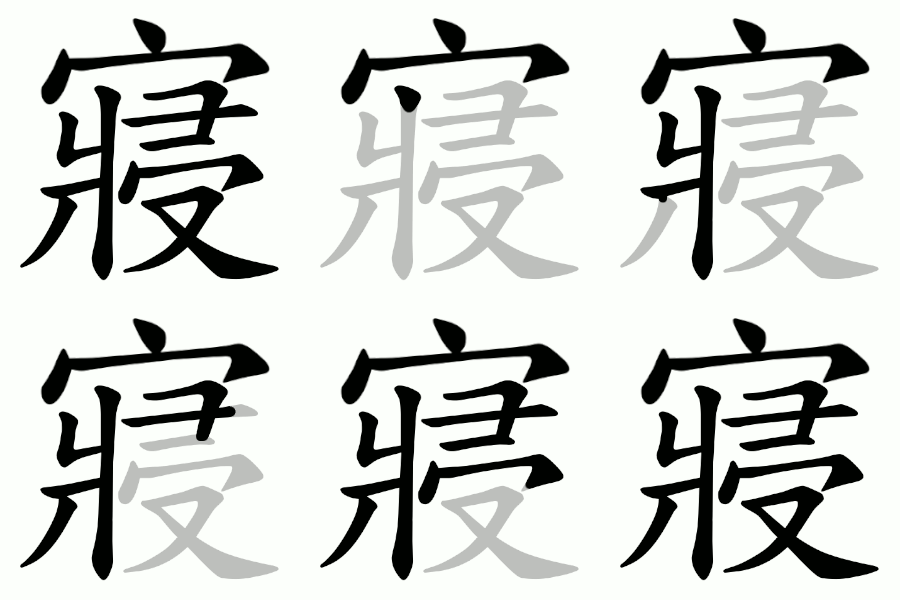
寢
- to sleep;
- to lie down;
- sleeping quarters;
Etymology
A phono-semantic compound:
宀 (roof; house) — semantic component, indicates an indoor, domestic context
侵 (to invade) — phonetic component, supplies the sound (chim / qǐn)
Historical forms and character development
Early form 寑 (U+5BD1) recorded in the Shuowen Jiezi, now treated as a variant character:
宀 (house)
侵 (phonetic)
Even earlier forms did not contain 侵, but instead used 帚 (broom).
The early structure is commonly explained as “cleaning the house and resting.”
This reflects the idea of preparing a dwelling for rest, leading naturally to the meaning “to sleep.”
In the modern standard form 寢, the 人 element of 侵 was replaced with 爿.
爿 is traditionally interpreted as a bed, couch, or sleeping platform. This reinforces the semantic field of lying down and resting.
Related variant character 㝲 (U+3772), recorded in Shuowen Jiezi as a separate character:
宀 (house)
疒 (illness)
夢 (dream)
帚 (broom)
Explained as “lying down due to illness”.
However, the Kangxi Dictionary regarded this distinction as unnecessary and treated 㝲 as a variant of 寢.
Semantic evolution:
- resting inside a house
- lying down on a bed
- sleeping
- sleeping quarters or inner chambers
- cessation or suspension (figurative)
Usage in Korean
취침 (就寢) — going to bed
침실 (寢室) — bedroom
침전 (寢殿) — royal sleeping hall
Additional notes
寢 has strong associations with:
- privacy
- inner space
- ritual rest, especially in royal or aristocratic contexts
In premodern East Asia, sleeping quarters were symbolically important, often separated from public or administrative spaces.
In classical texts, 寢 often refers to:
- royal sleeping quarters
- private inner rooms
- nighttime rest
Examples of common compounds:
寢室 — sleeping room
就寢 — to go to bed
寢殿 — royal bedchamber
Related characters:
眠 — to sleep (eye-focused nuance)
睡 — to sleep deeply
宿 — to lodge; stay overnight
臥 — to lie down
Words that derived from 寢
- 十女一水 (JVME)
- ⿱ 宀 ⿰ 爿 𠬶
- ⿱ 宀 𭷆