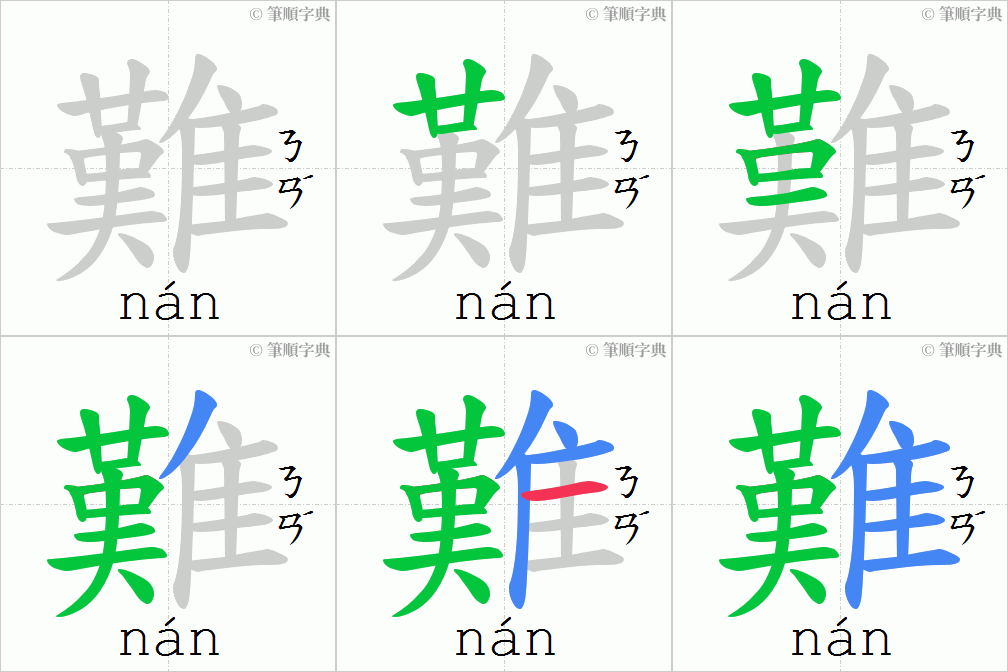
難
- difficulty;
Etymology
Phono-semantic compound:
隹 (추, “short-tailed bird”) – provides the meaning (originally referring to a bird)
𦰩 (근/간) – provides the sound
Originally, the character depicted a certain bird, but it was later borrowed to mean “difficult.”
The earliest meaning of 難 was:
- something hard to deal with
- an obstacle that causes suffering
From this, the character developed multiple semantic branches.
Usage in Korean
난이도 (難易度) — degree of difficulty
곤란 (困難) — hardship
재난 (災難) — disaster
난색 (難色) — reluctance
난해 (難解) — difficult to understand
Additional notes
難 was often used in judicial language meaning:
- to interrogate
- to reproach wrongdoing
Related characters:
艱 — hardship
苦 — suffering
困 — distress
責 — blame
問 — question, interrogate
Do not confuse 難 with 亂 (란, “chaos”) – the characters and meanings are different.
Classical usage:
《論語》 (The Analects)
「君子不以言舉人,不以人廢言,亦不難其人」
“The gentleman does not judge a person by words alone, nor discard words because of the person, nor does he harshly fault others.”
- 廿人人土 (TOOG)
- 廿戈人土 (TIOG)
- ⿰⿱ 廿 ⿻ 口 夫 隹 (G H T K V)
- ⿰ 𦰩 隹 (J)