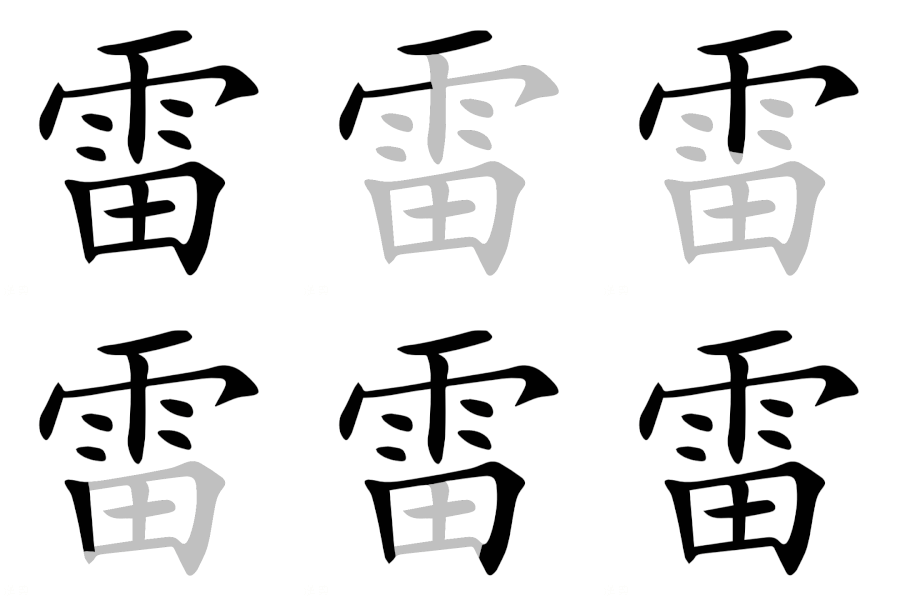
雷
- thunder;
- lightning bolt;
Etymology
Ideogrammatic compound, historically evolving:
雨 (rain) — semantic indicator
田 (field) — remnant of older pictorial elements 口
Although commonly explained today as 雨 + 田, this is the result of long graphic simplification, not the original structure.
Etymology and historical development
In oracle bone inscriptions early forms of 雷 depict:
- branching lines between them
These are widely interpreted as:
lines → lightning
田 / 口 → thunderous sound or resonance
This suggests 雷 originated as a visual + auditory depiction of thunder and lightning, likely imitative in nature.
In Bronze inscriptions (金文) the multiple 田 elements become standardized (often four), and lightning lines connect them.
雨 begins to appear above the structure.
In Small Seal Script (小篆) 雨 is fixed at the top. The internal structure is reduced to three 田. Lightning lines disappear.
In Clerical Script and Regular Script the internal 田 elements collapse into a single 田. The modern form 雷 is established.
Usage in Korean
雷-related compounds are common in:
- weather reports,
- formal writing,
- classical-style metaphors for power or suddenness.
Everyday Korean prefers 천둥, but 雷 compounds are firmly established in Sino-Korean vocabulary.
Common & standard compounds:
雷雨 (뇌우) — thunderstorm
雷聲 (뇌성) — thunder; thunderclap
雷鳴 (뇌명) — peal of thunder; roaring thunder
落雷 (낙뢰) — lightning strike
雷電 (뇌전) — thunder and lightning
Meteorological / scientific terms:
雷雲 (뇌운) — thundercloud
雷放電 (뇌방전) — lightning discharge
雷擊 (뇌격) — being struck by lightning
雷波 (뇌파) — electric wave; brain wave (older/technical usage)
Figurative / literary usage:
雷同 (뇌동) — blind conformity; echoing others’ opinions
雷霆 (뇌정) — thunderous wrath; fierce anger
雷擊之勢 (뇌격지세) — thunderbolt-like force; overwhelming momentum
Military / symbolic usage:
雷火 (뇌화) — thunderous fire; explosive firepower
雷聲大雨點小 (뇌성대우점소) — “much thunder, little rain”
Additional notes
Related and derivative characters:
畾 — “between fields”; also an ancient variant of 雷
Characters using 畾-derived seal forms:
罍 (wine vessel) — seal form 𦉩
鸓 (a kind of animal / flying squirrel) — seal form 𪉀
These preserve fragments of the older 雷 graph tradition.
Alternative forms
- 一月田 (MBW)
- ⿱ ⻗ 田