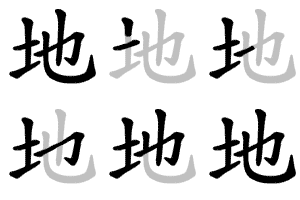
地
- earth;
- ground;
- land;
- soil;
Etymology
A phono-semantic compound:
土 (토) — semantic component, indicating earth, soil, ground
也 (야) — phonetic component, supplying the sound (지 / dì)
The character originally denoted the physical ground or land, contrasting with 天 (heaven).
From this basic sense developed meanings related to territory, environment, and physical reality.
Semantic development:
- physical ground — soil, land
- spatial domain — territory, region
- abstract position — status, standing
- functional marker — adverbial particle (Chinese)
Across all uses, 地 retains the core idea of a base or foundation.
Usage in Korean
Concrete / geographical sense:
땅 (地) — land; ground
대지 (大地) — the great earth
토지 (土地) — land; real estate
지면 (地面) — ground surface
Abstract / conceptual sense:
현지 (現地) — the actual location
지위 (地位) — position; status (metaphorical “place”)
지경 (地境) — boundary; territory
Additional notes
Related characters (earth & space):
土 — earth; soil (material substance)
田 — field; farmland
壤 — soil; earth (fertile ground)
界 — boundary; world
域 — territory; domain
Among these, 地 is the most general and foundational, serving as the base concept for physical and abstract “place”.
The 4th stroke of 地 is rare and appears in very few characters.
Only a handful of hanja share this stroke:
也 (야) and derivatives like 地 (지), 他 (타), 池 (지), 馳 (치), 弛 (이), 拖 (타), 施 (시), and 乜 (먀).
Because of this unique stroke, 地 is treated as an important character in calligraphy study.
Chinese grammatical usage:
In Modern Chinese, 地 functions as an adverbial marker, placed after adjectives or verbs to indicate manner:
慢慢地走 — to walk slowly
高興地說 — to say happily
This grammatical function is unique to Chinese and not reflected in Korean or Japanese usage.