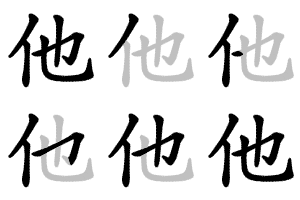
他
- another, other, someone else;
他 means “other,” “another,” or “someone else.”
By extension, in modern Chinese it functions as the third-person pronoun “he”, later differentiated into 她 (she), 它 (it), 牠 (animals), and 祂 (divinities).
Etymology
Usage in Korean
他人 (타인) — another person, others
他國 (타국) — another country, foreign country
他方 (타방) — another place, elsewhere
他日 (타일) — another day, someday
Additional notes
Originally, 他 simply meant “other, different (but not the same).” During the Han to Northern & Southern Dynasties, the sense extended to “other person,” and by the Tang dynasty it had fully developed into a third-person pronoun. Before the 20th century it was used without gender distinction.
In 1920, the linguist Liu Bannong (劉半農) introduced 她 as a specifically female pronoun in his poetry, paralleling the Western he/she distinction. This innovation spread quickly, giving us the modern set: 他 (he), 她 (she), 它 (it), 牠 (animals), and 祂 (deities).