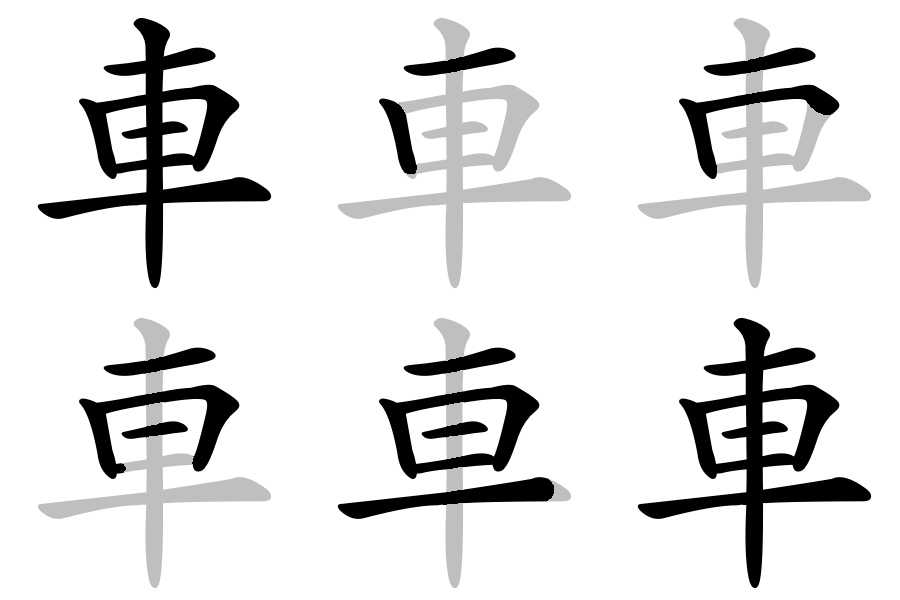
車
- cart, vehicle, wagon;
- wheele;
Etymology
It is an ideogram representing the top-down view of a cart or vehicle. It frequently appears in characters related to wheeled vehicles.
Usage in Korean
In Korean, 車 is used as a standalone character pronounced "cha" or "geo." In everyday conversation, "차" usually means "자동차" (automobile). However, legally, according to the Road Traffic Act, "차" covers a broader category including automobiles, bicycles, horse carts, agricultural machinery, and construction equipment. Trains or strollers are generally not referred to as "차."
It is mostly used as a radical on the left side (변) or bottom (발) of other Chinese characters to form new characters. Most characters containing 車 are related to vehicles or transportation.
Representative characters related to vehicles include:
輪 (wheel),
軌 (wheel track),
輿 (cart),
輛 (counter for vehicles),
輸 (to transport, send),
載 (to load, carry).
On the other hand, some characters containing 車 are not directly related to vehicles, for example:
軍 (military)
輕 (light in weight)
較 (to compare)
軟 (soft)
轉 (to turn, revolve)
輩 (generation, group)
軒 (veranda, house with an overhanging roof)
So, while 車 generally signals meanings connected to vehicles, it also appears in characters with more abstract or metaphorical meanings.
Additional notes
The simplified Chinese form is 车, derived from the cursive script form and adapted for printing.
Characters with 車
- 十田十 (JWJ)
- ⿻ 亘 丨
- ⿻ 二 申