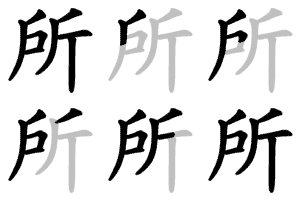
所
- place, location;
- that which, what (nominalizer);
Etymology
Phono-semantic compound:
斤 (axe) – semantic, originally indicating chopping or cutting.
戶 (door, household) – phonetic element.
According to Shuowen Jiezi, the earliest sense was the sound of chopping wood (as in 詩經 伐木所所).
Later borrowed to mean “place” and further extended to mark nominalized verb phrases, functioning like “that which …” or “…-ing” in Classical Chinese.
In early scripts (bronze inscriptions, bamboo slips), the strokes of 戶 and 斤 were often merged, producing variants.
Usage in Korean
住所 (주소) – residence
場所 (장소) – place, venue
研究所 (연구소) – research institute
所謂 (소위) – so-called, “what is called”
所有 (소유) – possession, ownership
Additional notes
In Classical Chinese grammar:
所 + verb → nominalized phrase (e.g., 所見 “what is seen”).
verb + 所 → “place where [verb happens]” (e.g., 居所 “the place one lives”).
Alternative forms
Multiple historical variants exist:
齭, 㫹, 乺, 㪽 etc.
- 竹尸竹一中 (HSHML)
- ⿰ 戶 斤 (G T K)
- ⿰ 戸 斤 (J)