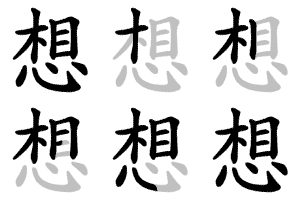
想
- to think, to consider, to imagine, to long for;
Etymology
Phono-semantic compound:
心 (heart, mind) – semantic, indicating thought, emotion.
相 (to observe, mutual, each other) – phonetic element.
Originally depicted the act of directing one’s mind toward something seen or remembered, leading to meanings of thinking and longing.
Semantic range:
- to think, to ponder, to consider;
- to imagine, to visualize, to conceive;
- to long for, to miss, to desire;
- figurative: intention, aspiration, mental projection.
Usage in Korean
思想 (사상) – thought, ideology
想像 (상상) – imagination
理想 (이상) – ideal, aspiration
幻想 (환상) – illusion, fantasy
想念 (상념) – thought, contemplation
遐想 (하상) – daydream, reverie
Additional notes
In modern Mandarin, 想 can also mean to want (e.g., 我想去 “I want to go”).
Often paired with 念 (to think of, to recite) in compounds like 想念, emphasizing longing or remembrance.
Closely related to 思 (to think, to yearn), but 想 often suggests active imagination or desire, while 思 leans toward reflection and remembrance.
Words that derived from 想
- 木山心 (DUP)
- ⿱ 相 心