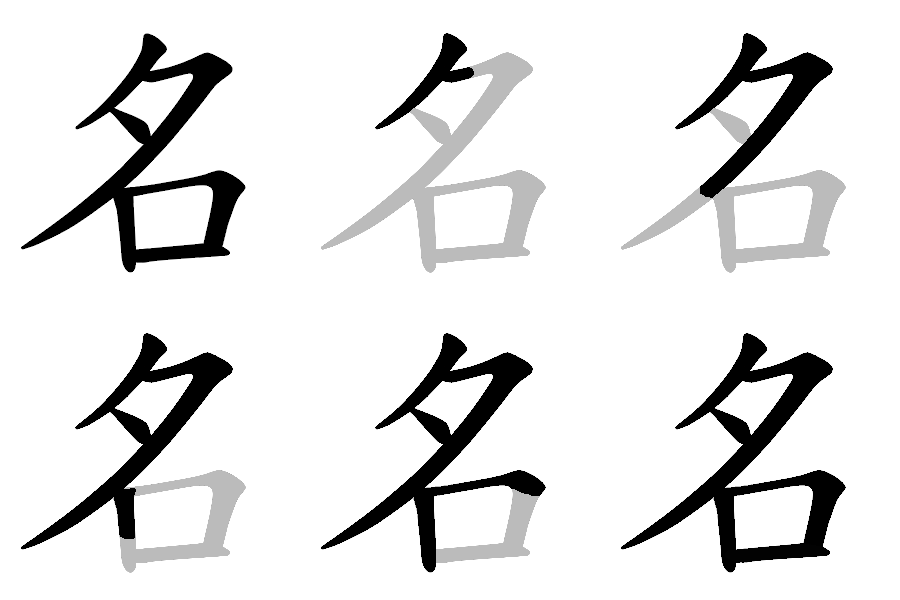
名
- name;
Etymology
It is a compound ideogram formed from:
夕 (저녁 석) – meaning evening, and
口 (입 구) – meaning mouth.
In oracle bone inscriptions (甲骨文 jiǎgǔwén), the position of 夕 shifted between the left and right of 口 until, by the bronze script (金文 jinwen) stage, the final placement was standardized.
The prevailing interpretation is:
“In the evening, when it was too dark to recognize one another by sight, people would call each other’s names to identify who they were.”
From this concept, 名 came to mean “to call someone by name” and eventually simply “name.”
Usage in Korean
It is also used as a counter for people (e.g. “3명” in Korean, meaning “three people”).
Thus, 名 not only expresses the idea of a name or identity, but also carries the function of counting individuals in some contexts.
- 弓戈口 (NIR)
- ⿱ 夕 口