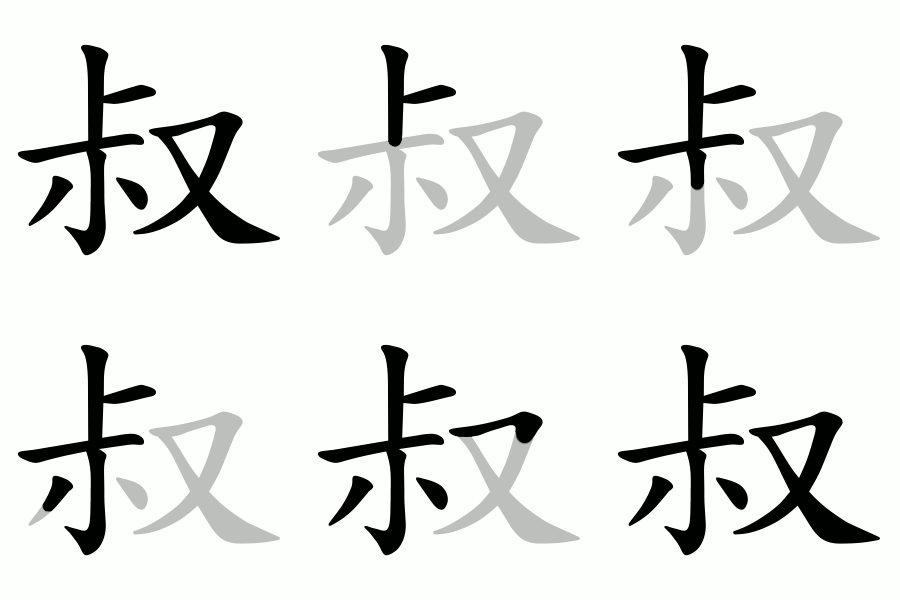
叔
- uncle;
- junior;
- younger relative;
Etymology
A phono-semantic compound composed of:
又 — “hand,” indicating action or function
尗 — phonetic element (shuk), originally depicting young grain shoots or beans
In early usage, 尗 conveyed the idea of smallness or youth, which later extended semantically to “younger” or “junior.”
Core meanings:
- younger paternal uncle (father’s younger brother)
- a man of the father’s generation (polite address)
- junior; younger (relative sense)
- secondary or subordinate (extended meaning)
Usage in Korean
숙부 (叔父) — paternal uncle (younger than one’s father)
숙모 (叔母) — wife of one’s paternal uncle
숙질 (叔姪) — uncle–nephew relationship
백숙 (伯叔) — elder and younger uncles collectively
Additional notes
In classical kinship systems, 叔 specifically means father’s younger brother.
This contrasts with:
伯 — father’s elder brother
仲 — second among brothers
季 — youngest
叔 often appears in:
- genealogical records
- ritual texts
- historical biographies
Example:
叔父 — paternal uncle
季叔 — youngest uncle
In modern Korean, the native term 아저씨 broadly means “middle-aged man,” but 叔 remains formal and genealogical.
In Chinese, 叔 is widely used as a polite address for unrelated older men (e.g. 王叔).
In Japanese, おじ (叔) remains common in everyday speech.
Related characters:
伯 — elder uncle
仲 — second among brothers
季 — youngest
父 — father
兄 — elder brother
弟 — younger brother
Classical citations:
Book of Rites (禮記)
「父之弟曰叔。」
“The father’s younger brother is called shu (叔).”
This passage establishes the formal kinship definition of 叔.
In dynastic histories, 叔 is frequently used in royal genealogies:
叔父輔政 — “The uncle assisted in governance”
Words that derived from 叔
- 卜火水 (YFE)
- ⿰ 尗 又
Neighboring characters in the dictionary
