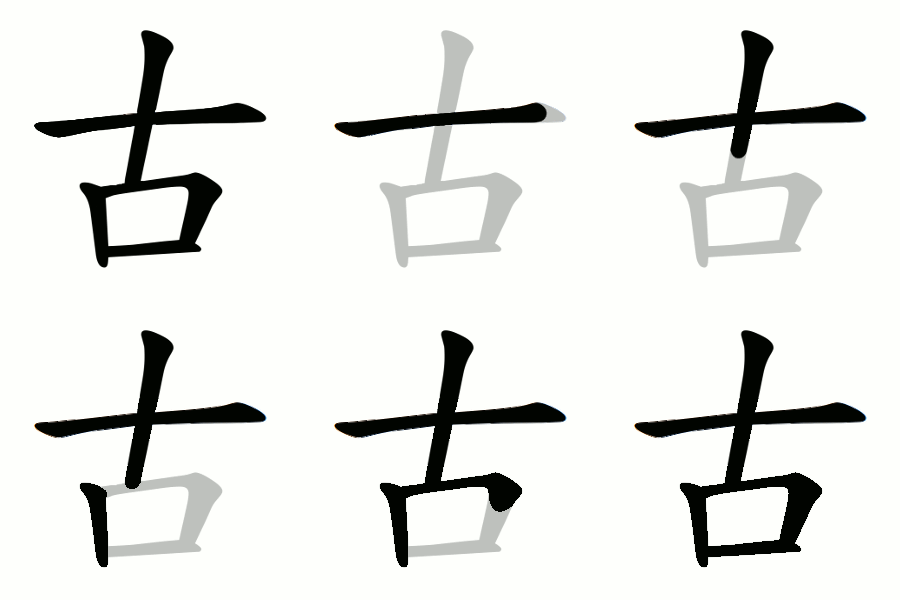
古
- old;
- ancient;
Etymology
Composed of 十 (십, “ten”) + 口 (구, “mouth”), and is traditionally regarded as an ideogrammic compound.
The 口 is often interpreted as “speech” or “words,” while the 十 has two main interpretations:
- “Very large number” theory – 十 is taken to mean “a great number,” symbolizing stories and traditions passed down orally over countless generations, leading to the meaning “ancient times.”
- “Shield/armor” theory – 十 is seen as a variant of 干 (shield) or 甲 (armor), suggesting that stories about old battles gave rise to the meaning of “old” or “ancient.”
In oracle bone script (甲骨文 jiǎgǔwén), the form of 十 varied:
- sometimes drawn as a stick piercing through 口,
- other times drawn without piercing it.
This has led to different interpretations of its original image — some think it even looks like a church symbol on a map or a tombstone with a stele in front of it.
Usage in Korean
고대 (古代) — antiquity
고전 (古典) — classical work
고사 (古事) — ancient event
유물 (遺物) — relic (from ancient times)
태고 (太古) — primeval age
Additional notes
故 a similar in meaning:
古 = “old, ancient” - comparable to past tense in English: describing something from long ago.
故 = “reason, tradition, something continuing from the past” - comparable to present perfect tense: something from the past that still has effect now.
Despite these nuances, 古 and 故 are sometimes interchangeably used in historical and literary contexts.
Classical citations:
《論語》 (The Analects)
「溫故而知新。」
“Review the old to understand the new.”
Related characters:
今 — now (temporal opposite)
昔 — long ago (deeper antiquity)
旧 — former; old (recent past)
老 — aged (age / person)