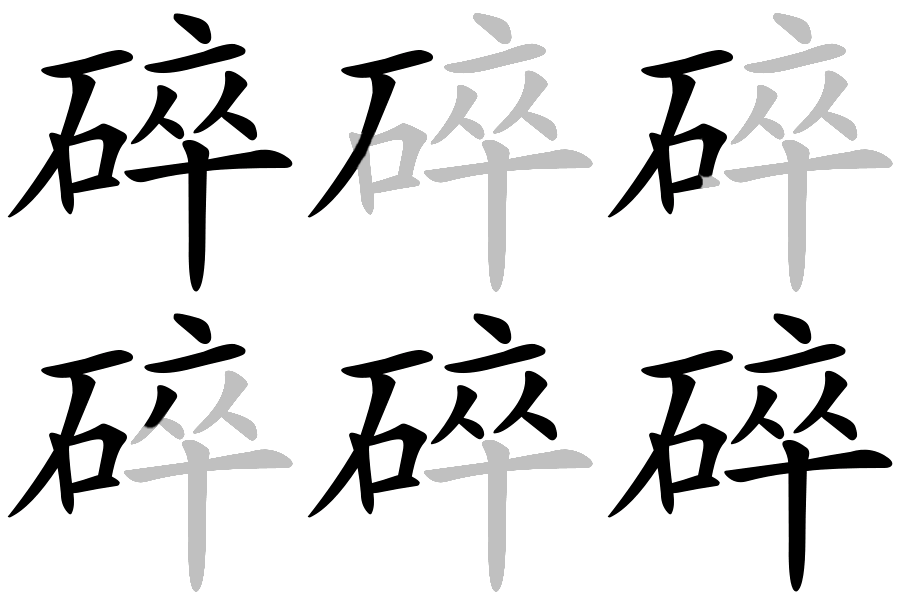
碎
- to break into pieces;
- to smash;
- to shatter;
Etymology
A phono-semantic compound composed of:
石 (stone) — semantic component, indicates hard material, emphasizing physical breaking;
卒 (to finish; soldier) — phonetic component, supplies the sound "sui" and contributes a sense of completion or finality.
The original image conveys stone being broken thoroughly into small pieces, highlighting not just breaking, but reduction into fragments.
The meanings of 碎 developed from concrete to abstract:
- physical shattering — stones, glass, objects broken into small pieces;
- fragmented state — scattered, not whole;
- mental or emotional exhaustion (figurative) — “worn down,” “shattered” in spirit or focus;
This extension preserves the core idea: loss of wholeness through force or pressure.
Usage in Korean
The character is common in technical, literary, and emotional descriptions.
Physical:
분쇄 (粉碎) — to pulverize; to smash
파쇄 (破碎) — fragmentation; shattering
부서지다 / 깨지다 — broken (state)
Abstract / figurative:
마음이 부서지다 / 심신이 파쇄되다 — emotionally shattered
시간이 잘게 쪼개지다 — time fragmented
Additional notes
碎 emphasizes degree: not merely broken, but broken into many small pieces.
Often contrasted with:
破 — to break (general)
裂 — to split or tear
In figurative use, 碎 suggests irreversibility or deep impact.
Related characters:
破 — break; destroy
裂 — split; tear
粉 — powder
毀 — destroy
殘 — broken; damaged remains
Among these, 碎 most strongly conveys complete fragmentation into small pieces.
Classical-style usage:
粉身碎骨 — “to be smashed to powder and bones broken” (utter destruction or total sacrifice)
心神破碎 — “the spirit shattered”
Words that derived from 碎
- 一口卜人十 (MRYOJ)
- ⿰ 石 卒
Neighboring characters in the dictionary
