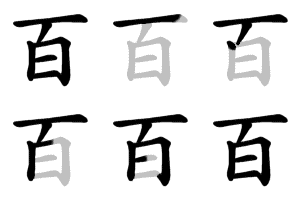
百
- hundred, 100, one hundredth;
Etymology
The character is a phono-semantic compound, combining the sound of 白 ("white") and the meaning of 一 ("one").
However, based on its shape in oracle bone inscriptions, some scholars consider it a pictograph, believed to depict a wasp nest hanging from a roof. Since one wasp nest could contain around 100 wasps, this is considered a plausible hypothesis.
According to research on the phonetic origins of Old Chinese, 百 may be cognate with 八 ("eight"). In the Sinosphere, both 八 (8) and 百 (100) are considered symbolic of completeness, and this historical background may have influenced the meanings and usage of the character.
Semantic extensions:
- the number 100;
- many; numerous;
- all kinds of.
Like 千 (thousand) and 萬 (ten thousand), 百 may imply “many” rather than a literal count.
Usage in Korean
In many compounds, 百 implies abundance or variety.
백성 (百姓) — the people; commoners
백과 (百科) — encyclopedia
백전백승 (百戰百勝) — victory in every battle
백화점 (百貨店) — department store
Additional notes
The banker’s (formal financial) numeral for one hundred is 佰.
Related characters:
千 — thousand
萬 — ten thousand
白 — white (phonetic base)
When pronounced baek (백), it represents the number 100 and its ordinal form. However, it can also mean "all," "many," or "long-lasting."
When read as maek (맥), it can mean "to exert effort" or "to strive," though this reading is rare in modern usage and not widely known—most people recognize the character only as "ilbaek baek" ("one hundred").
Derived characters
Variant characters include 佰 and 𦣻. Among them, 佰 (meaning “chief,” “leader,” or a rare reading for “length”) contains the component 百 and is pronounced the same as “baek,” so it is used as a homophone variant (갖은자).
Words that derived from 百
- 一日 (MA)
- ⿱ 一 白
- ⿱ 丆 日