千
- thousand, 1000, one-thousandth;
Etymology
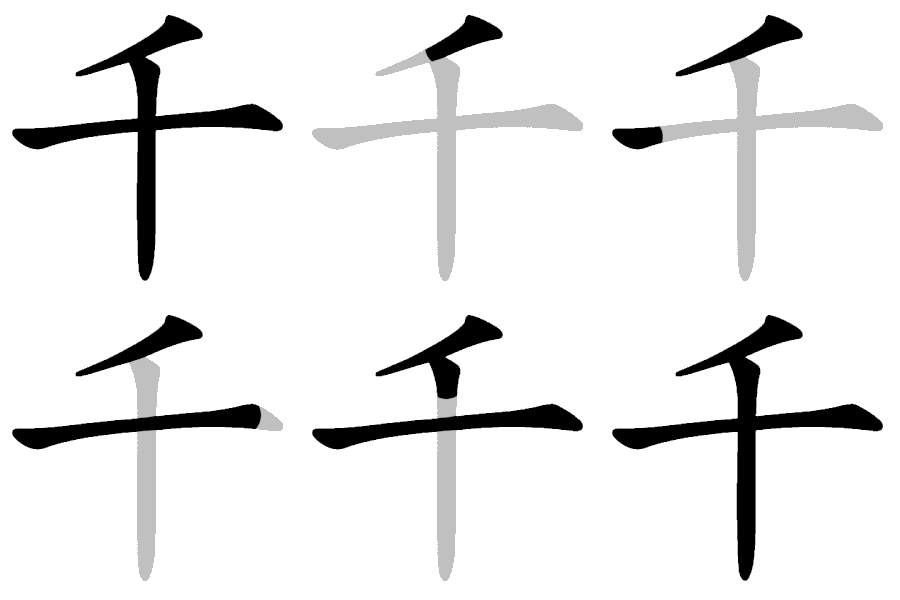
千 is a pictographic/indicative character.
It originally represented a large number, and its form is thought to be derived from a modified form of 十 (ten) to indicate a greater magnitude. Over time, it came to specifically mean one thousand.
Semantic development:
- large number;
- specific number: one thousand;
- figurative meaning: many; countless.
Usage in Korean
천원 (千元) — one thousand won
천년 (千年) — one thousand years; millennium
수천 (數千) — several thousand
Additional notes
Alternative forms
(financial) 仟, 阡
For anti-counterfeiting purposes, a variant form 仟 is sometimes used in place of 千, and this is considered a homophone variant.
千
일천
천
ilcheon
cheon
Kangxi radical:24, 十 + 1
Strokes:3
Unicode:U+5343
Cangjie input:
- 竹十 (HJ)
Composition:
- ⿱ 丿 十

The content on this page provided under the CC BY-NC-SA license.