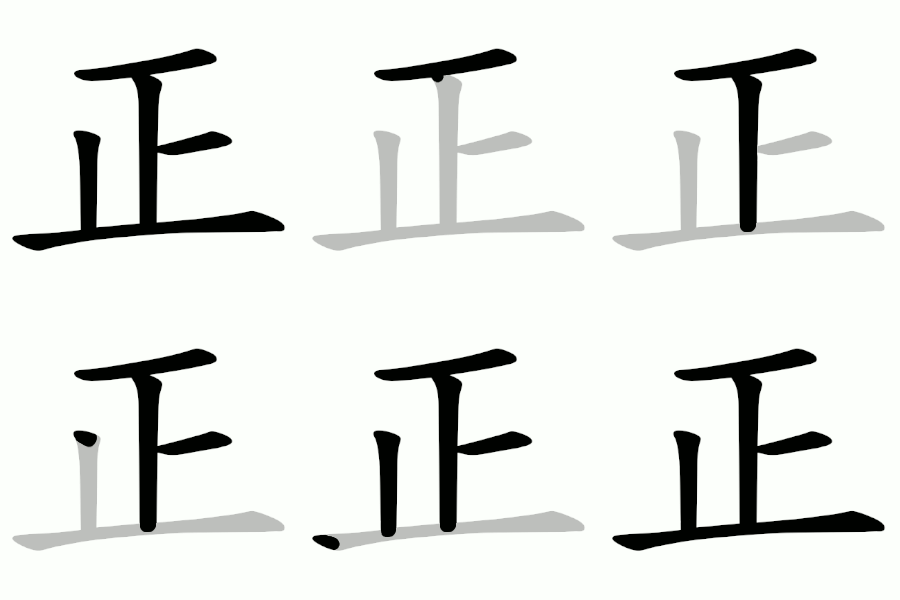
正
- correct;
- upright;
- proper;
Etymology
Traditionally analyzed as a compound ideograph:
止 (지) — semantic element, foot / step; to stop, give the meaning of “stepping” or “movement”
丁 (정) — phonetic element, provide the sound
Originally meant “to march, to go on an expedition, to attack” (same origin as 征), carried the sense of marching toward the correct direction, reinforcing ideas of order and norm.
Later shifted to the meaning “upright, correct” via semantic extension/grafting.
Seal Script (小篆): simplified 丁’s old shape 囗 into a single horizontal stroke 一, leading to the modern shape.
Semantic development:
- correct position — spatial alignment
- moral correctness — right vs. wrong
- norm & standard — correctness as rule
- purity & orthodoxy — unmixed, orthodox, proper
Usage in Korean
In Korean, 正 is equally central, appearing across ethical, legal, linguistic, and philosophical vocabulary.
Common compounds:
정확 (正確) — accurate; exact
정직 (正直) — honest
정상 (正常) — normal
정도 (正道) — the right path; orthodoxy
정음 (正音) — correct pronunciation
정의 (正義) – justice
정월 (正月) – the first month of the lunar year
정식 (正式) – official, formal
정중앙 (正中央) — exact center
Standalone uses:
정(正) — correct / right (as in marking answers)
정면 (正面) — front; face-to-face
Extended meanings: in mathematics and science, 正 - positive (opposite of 負 “negative”); also used for very large number units (10⁴⁰).
Additional notes
Compared with 直 (straight), 正 emphasizes normative correctness, not just physical straightness.
Related characters (correctness & norms):
直 — straight
公 — public; just
中 — center; balanced
準 — standard
真 — true
Among these, 正 functions as the core axis of correctness, anchoring ideas of truth, norm, and moral rightness.
Similar shape characters
- 一卜中一 (MYLM)
- ⿱ 一 止