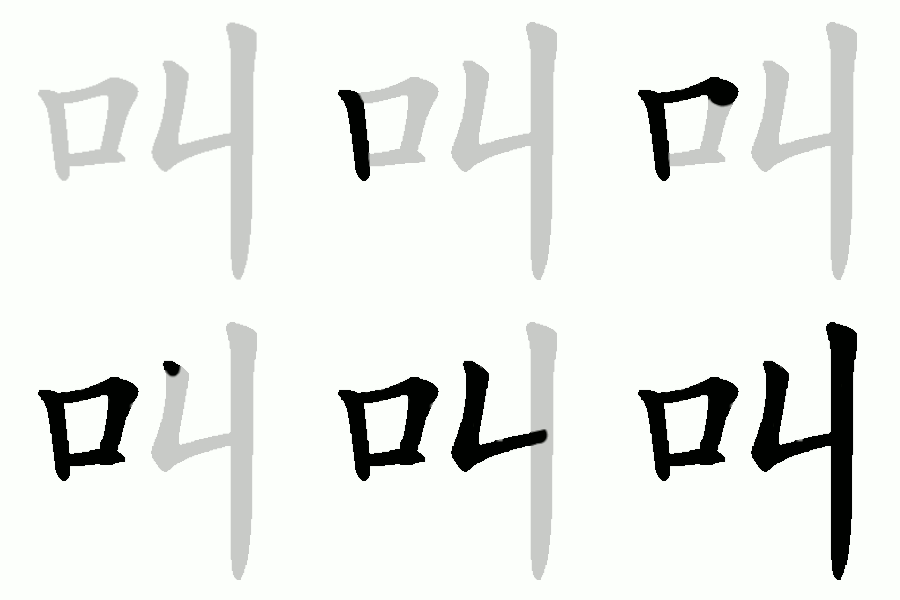
叫
- to cry out, call, shout, yell;
Etymology
A phono-semantic compound:
口 (mouth) — semantic component, related to speech and sound
丩 — phonetic component, providing pronunciation
The structure clearly emphasizes sound produced by the mouth, making the meaning transparent even in early stages.
Usage in Korean
叫喚 (규환) — to call out loudly
號叫 (호규) — to shout; to cry aloud
悲叫 (비규) — a cry of sorrow
叫聲 (규성) — shouting sound; cry
叫喊 (규함) — loud calling; yelling
Note: In modern Korean, these compounds are rare or literary, while the character is extremely common in Chinese.
Additional notes
Relationship with related characters:
叫 — to call / shout (neutral, everyday)
呼 — to call / breathe / invoke (broader, often formal)
號 — to wail, roar, cry loudly (emotional or extreme)
Classical citations:
In classical texts, 叫 often appears together with 號 (to wail, roar), emphasizing loud or emotional vocalization.
《左傳》 (Zuo Zhuan)
「民叫而走。」
“The people cried out and fled.”
《史記》 (Records of the Grand Historian)
「號叫於市。」
“They shouted aloud in the marketplace.”
《廣雅》 (Guangya)
「叫,呼也。」
“叫 means ‘to call out.’”
Words that derived from 叫
- 口女中 (RVL)
- ⿰ 口 丩
Neighboring characters in the dictionary
