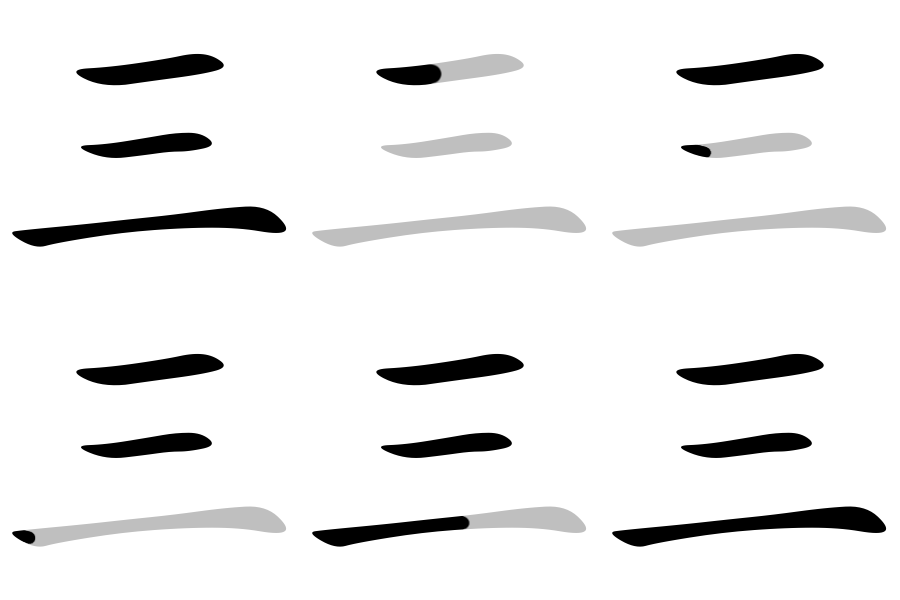
三
- three, number 3, third;
Etymology
It is an ideogram, modeled after the image of three drawn lines. Since it's shaped as 一 (one) above 二 (two), it can also be interpreted as "one added to two makes three."
The numbers 1 to 3 are based on the actual number of strokes they contain, resembling the quantity they represent; numbers after that do not follow this pattern.
Beyond the literal number, 三 often represents:
- balance;
- harmony;
- completeness in minimal plurality.
Many cultures treat “three” as structurally stable (e.g., tripod stability).
Usage in Korean
Additional notes
In East Asian philosophy, 三 is highly symbolic.
Confucianism:
삼강 (三綱) — Three Fundamental Bonds
삼덕 (三德) — Three Virtues
Daoism:
「一生二,二生三,三生萬物」
“One produces two, two produce three, three produce all things.”
Buddhism:
삼보 (三寶) — the Three Jewels (Buddha, Dharma, Sangha)
Alternative forms
Alternate or variant forms of 三 include 參, 参, 叁, 弎, 𢦘, and 𣬛. Among them, 參 (three/ participate) is a variant form used especially in official documents to prevent tampering—such as adding strokes to change 三 into 五 (five), for example.
In Simplified Chinese (used in Mainland China), 参 is used for the meaning "to participate" (with the bottom 三 slanted), while 叁 is used for the pure numeral "three" (with the bottom strokes straight), to distinguish between the two meanings.
Even those unfamiliar with Chinese characters can usually read and write up to 三, as it merely involves drawing one, two, or three lines.
- 一一一 (MMM)
- ⿱ 一 二
- ⿱ 𠄟 一