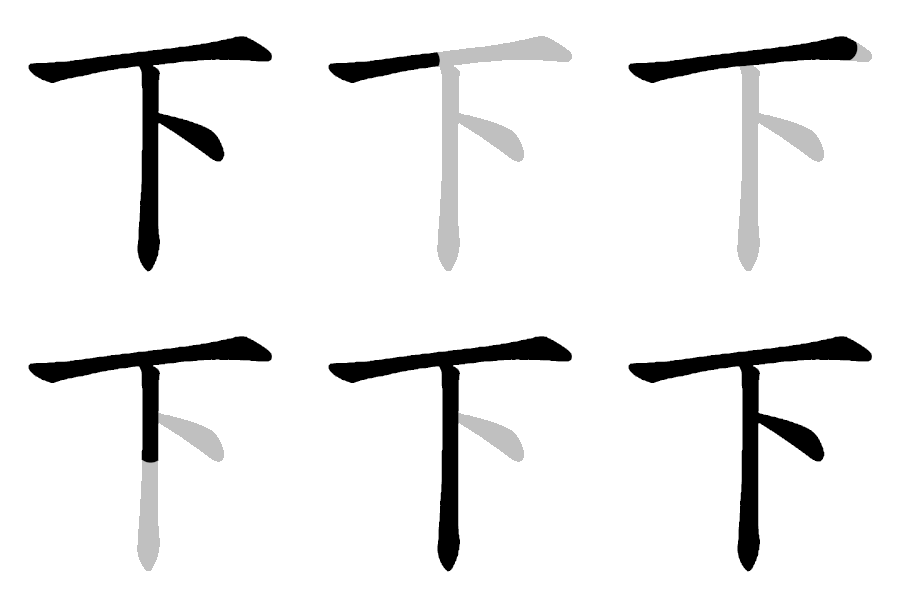
下
- below, under, to descend, to go down;
Etymology
An ideograph:
Early forms show a long horizontal stroke (一, the ground) with a shorter stroke or dot placed beneath, signifying “something lower, below the line.”
Over time, this evolved into the modern 下 shape. It is the counterpart of 上 (“above”), with the short stroke positioned beneath instead of above.
Semantic range:
- below, under (아래, 밑);
- to descend, to go down, to lower (내리다, 내려가다);
- the following, the next (다음);
- subordinate, inferior, lower rank (아랫사람, 신하);
- as an honorific suffix (閣下, 殿下, 陛下).
Usage in Korean
閣下 (각하) — Your Excellency
落下 (낙하) — fall, drop
廊下 (낭하/랑하) — corridor, hallway
低下 (저하) — decline, decrease
殿下 (전하) — His/Her Highness
地下 (지하) — underground, basement
天下 (천하) — the world, “all under heaven”
陛下 (폐하) — His/Her Majesty
下部 (하부) — lower part
下水 (하수) — sewage, drainage
Additional notes
In Chinese political philosophy, 下 often symbolizes subjects or the people in contrast to 上, the ruler. Phrases like 上下 describe the hierarchical order of society and cosmos: Heaven above, Earth below; ruler above, subjects below.
In Daoist texts, 下 has positive connotations of humility, aligning with water’s nature to flow downward and benefit all without contention (cf. Dao De Jing ch. 8). Thus “to be low” is to be virtuous, receptive, and in harmony with the Way (道).
The imagery of descending (下) resonates with the Christian theme of kenosis—Christ “emptying Himself” and descending from heaven (Philippians 2:6–8). In Christian theology, humility (being “low” or “under”) is exalted: “Whoever humbles himself will be exalted” (Matthew 23:12). Thus 下 embodies the paradox of spiritual greatness found in voluntary humility and service.