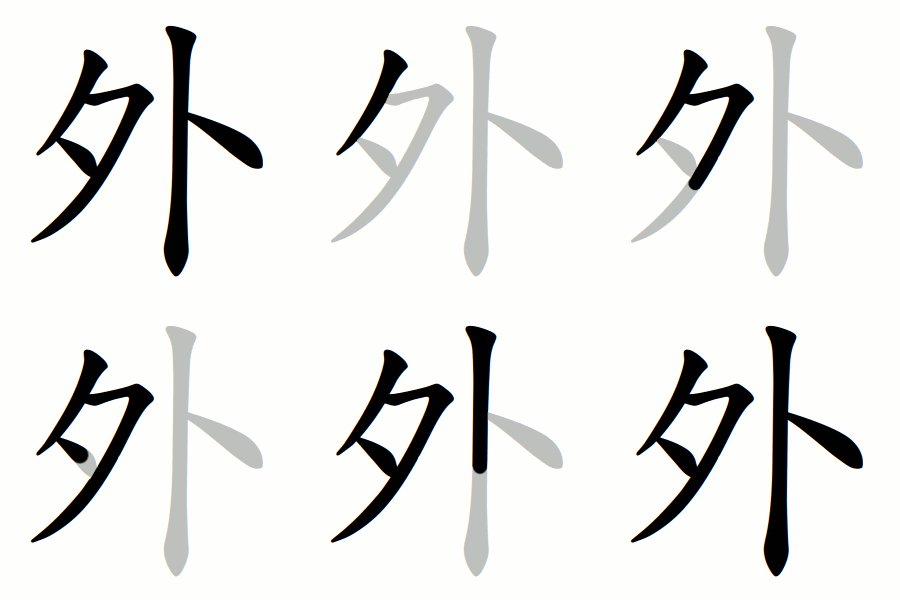
外
- outside;
- surface;
- exterior;
Etymology
In oracle bone inscriptions, the character appeared in forms resembling 卜 (to divine), which could also carry the meaning of “outside.”
Some forms combined 卜 with 內 (inside), emphasizing contrast between “inside” and “outside.”
In bronze inscriptions, 月 (moon / body part radical) was added on the left, and in some variants 夕 (evening) also appeared. By the seal script stage, the form with 夕 became standardized.
Traditional interpretation (as in Shuowen Jiezi): a compound of 夕 (evening, night) + 卜 (divination), with the idea that “divination performed at night is unusual, outside the norm.”
Often analyzed as a phono-semantic compound, with 月 providing the phonetic element and 卜 contributing meaning.
Semantic range:
- outside, exterior (바깥, 겉);
- beyond, external (외부, 대외);
- by extension, foreign, other, unrelated.
Usage in Korean
외부 (外部) — the outside, the exterior
외국 (外國) — foreign country
외교 (外交) — diplomacy
외모 (外貌) — outward appearance
외출 (外出) — going out
시외 (市外) — outside the city
Words that derived from 外
- 弓戈卜 (NIY)
- ⿰ 夕 卜 (G H T V H K)