久
- long time;
- long-lasting;
- prolonged;
Etymology
A pictographic or ideographic character.
The original form depicts a person lying sideways, representing a prolonged or lingering state. This imagery led to the meaning long-lasting or enduring over time.
Originally the character also referred to moxibustion (뜸). Later, the character 灸 (久 + 火) was created to specifically represent moxibustion.
Semantic development:
- prolonged duration;
- long-lasting or permanent;
- waiting for a long time.
Usage in Korean
영구 (永久) — eternal; permanent
구속 (久速) — long and short (time)
구래 (久來) — for a long time
영구히 남다 — to remain permanently
久
오랠
구
orael
gu
Kangxi radical:4, 丿 + 2
Strokes:3
Unicode:U+4E45
Cangjie input:
- 弓人 (NO)
- 難弓人 (XNO)
Composition:
- ⿸ 𠂊 ㇏
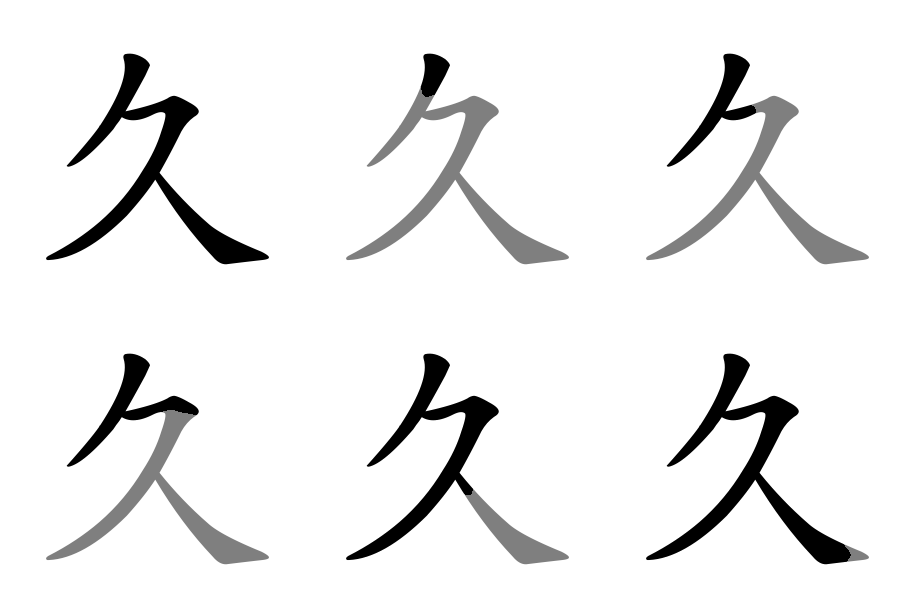
Neighboring characters in the dictionary

The content on this page provided under the CC BY-NC-SA license.