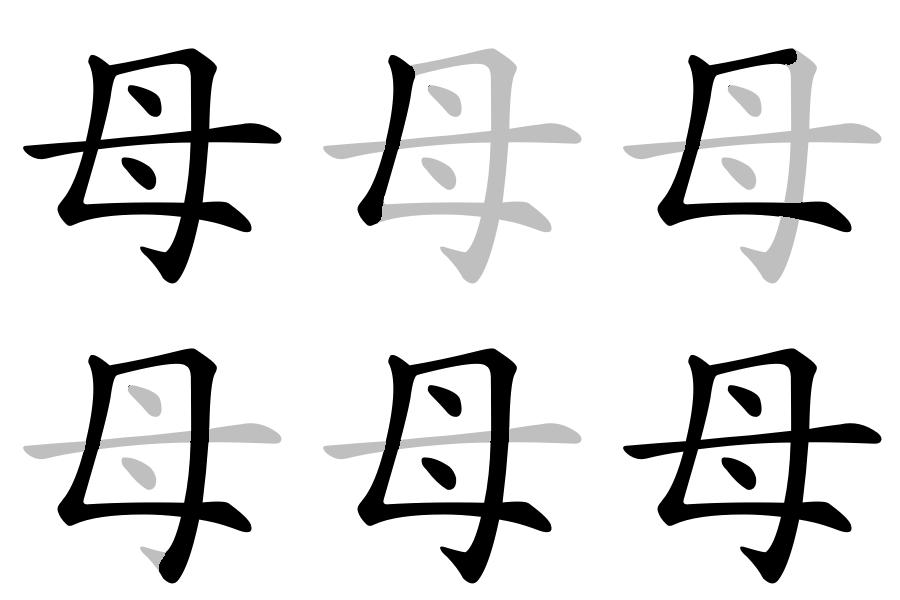
母
- mother;
Etymology
Originally depicts a woman with breasts, symbolizing a mother nursing her child.
The modern form derives from 女 (woman) with two dots inside, representing breasts.
In early script, clearly showed the nurturing figure of a mother.
The character was also borrowed (假借) to mean “not, do not” (a prohibitive sense), which later split off into the separate character 毋.
Semantic range:
- biological: mother, female parent;
- extended: female (in contrast with male 父, “father”);
- abstract: source, origin, root of something.
Usage in Korean
모친 (母親) – mother, one’s parent
부모 (父母) – parents
모성 (母性) – motherhood
국모 (國母) – mother of the nation
자모 (字母) – alphabet, “mother of letters”
모음 (母音) – vowel (linguistic “mother sound”)
Additional notes
The “prohibition” sense survives separately in 毋, no longer part of 母’s core meaning.
In many cultures, “mother” characters carry symbolic weight for origin or nurturing root, beyond literal motherhood.
Words that derived from 母
- 田卜戈 (WYI)
- ⿻⿻ 𠃋 𠃌 ⿻ ⺀ 一