本
- root, origin;
- basis;
- foundation;
- stem;
Etymology
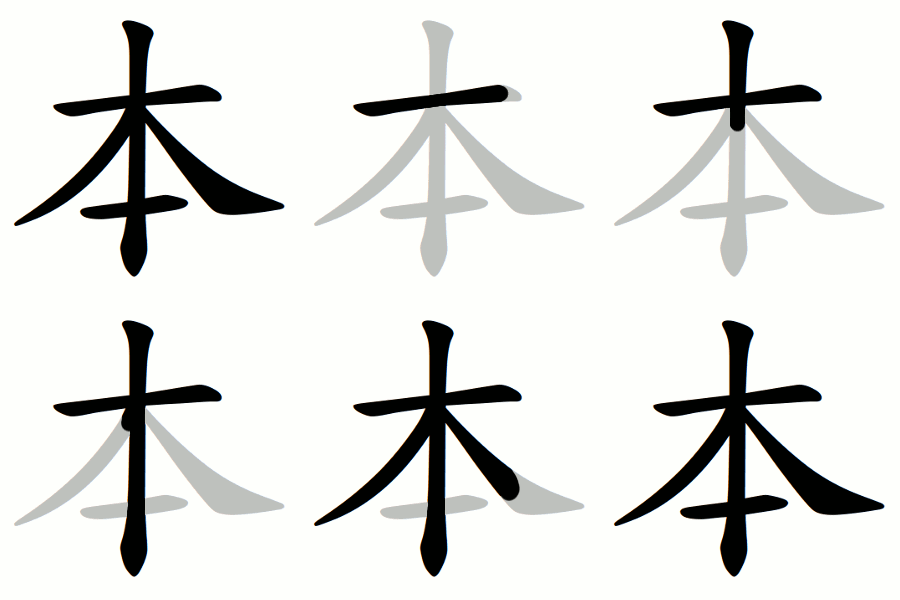
The character is a simple ideogram.
It shows 木 (나무 목, “tree”) with 一 drawn at the base of the trunk — visually indicating the root of the tree.
This depiction of the tree’s root makes it one of the most frequently cited classic examples of an ideogrammatic character.
Because the root of something represents its origin, 本 came to mean “foundation, origin, the essence.”
Later, it was also used for “book”, because books were seen as containing the “roots” of knowledge.
Usage in Korean
근본 (根本) — root; foundation
기본 (基本) — basic; fundamental
자본 (資本) — capital
본래 (本來) — originally
Additional notes
Related characters:
末 — tip; end (opposite, branch vs root)
根 — root (concrete root)
基 — foundation (abstract base)
原 — origin (source)
The contrast 本 vs 末 (“root vs branch”) is a core metaphor in East Asian philosophy.
Confucian texts repeatedly emphasize returning to the 本 (fundamentals).
The meaning “book” is semantic extension, not the original sense.
In Japanese, 本 is one of the most multifunctional characters in daily use.
Classical citations:
《論語》 (The Analects)
「本立而道生。」
“When the foundation is established, the Way comes into being.”
Neighboring characters in the dictionary
