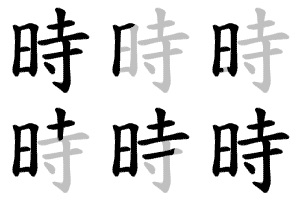
時
- time, moment, season, period;
- occasion;
Etymology
A phono-semantic compound, consists of:
日 (sun) — semantic component, indicates relation to time or day;
寺 (temple) — phonetic component, supplies pronunciation "si / shí."
The original idea relates to "observing the sun to determine time."
In ancient society, time was measured primarily through the movement of the sun.
From the concept of “the sun rising and setting in a regular pattern,” the idea of “time” and “moment” developed.
Semantic development:
- seasonal timing;
- specific moment;
- hour or time unit;
- abstract time concept.
Usage in Korean
It’s used in a huge range of compounds related to time, timing, and seasons.
교시 (校時) — school period, class time
당시 (當時) — at that time, back then
시간 (時間) — time
시계 (時計) — clock, watch
시대 (時代) — era
시기 (時期) — period
동시 (同時) — simultaneous
임시 (臨時) — temporary
시륜 (時輪) — "Wheel of Time” (Buddhist term)
시세 (時勢) — the trend of the times, current situation
시한부 (時限附) — limited time, time-limited
시공간 (時空間) — time and space
Additional notes