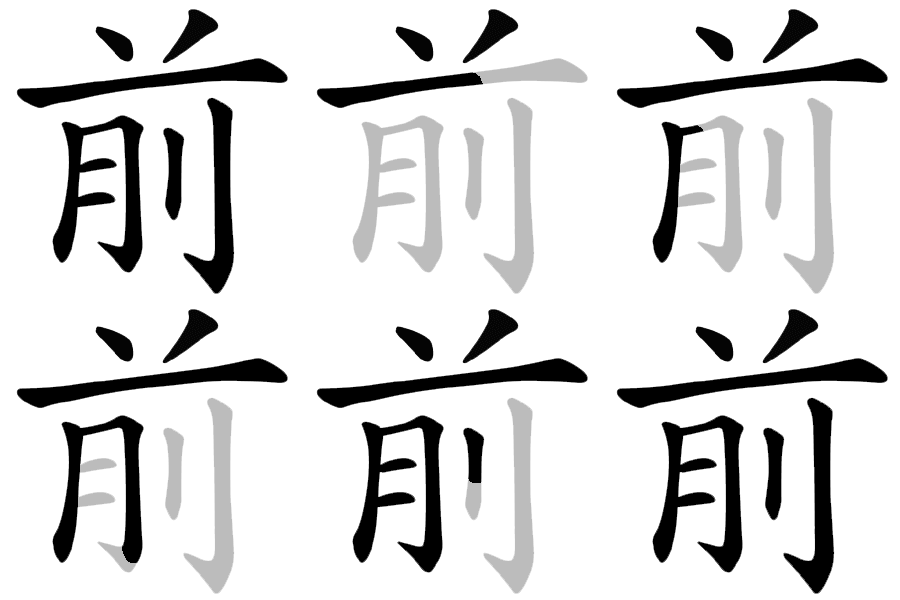
前
- front;
- before;
- earlier;
- forward;
Etymology
The original form of this character was 歬.
Oracle bone script (甲骨文):
Depict 止 (foot) under what looks like 舟 (boat), with paths (行) drawn on either side.
This pictogram was interpreted as “a boat moving forward,” leading to the meaning “front, ahead.”
Alternative interpretation:
Similar to the old form of 履 (신 리, “to wear shoes”), the 舟 shape may have represented a shoe, implying “wearing shoes and moving forward.”
Bronze inscriptions (金文) and Small Seal script (小篆):
Some forms omit the side 行 components.
Clerical script (隸書):
The modern form developed here, with 止 and 舟 becoming distorted into the components 䒑 and 月 in their current forms.
Variant with 刀:
In seal script (篆書), a version with 刀 (knife) added (𣦃 / 𠝣) appeared to convey the sense of “to cut.”
Later, the cutting meaning split off into the separate character 剪 (자를 전), while 前 reverted entirely to meaning “front.”
Usage in Korean
이전 (以前) — before, previously
전날 (前日) — the previous day
전방 (前方) — front, forward direction
전면 (前面) — the front side
전반 (前半) — the first half
In academic or formal writing, 前 is also used to mark B.C. dates. For example: 前 120년 = “120 B.C.”
Additional notes
前 is one of the most fundamental spatial–temporal characters in East Asian writing. It is neutral and descriptive. It does not imply superiority, leadership, or priority. It simply marks what is ahead in space or earlier in time.
This neutrality is why it appears extremely frequently in:
- narration
- time expressions
- spatial descriptions
Related characters:
後 — after, behind
先 — earlier, first
進 — advance
向 — face toward
Classical usage:
In Confucian texts 前 frequently used to mark earlier times, previous generations, or former states.
In historical writing 前 often introduces preceding events, dynasties, or rulers.
Example sense:
前人 — people of earlier times, predecessors