公
- fair;
- impartial;
- public;
- official;
- common;
Etymology
Pictophonetic/associative compound:
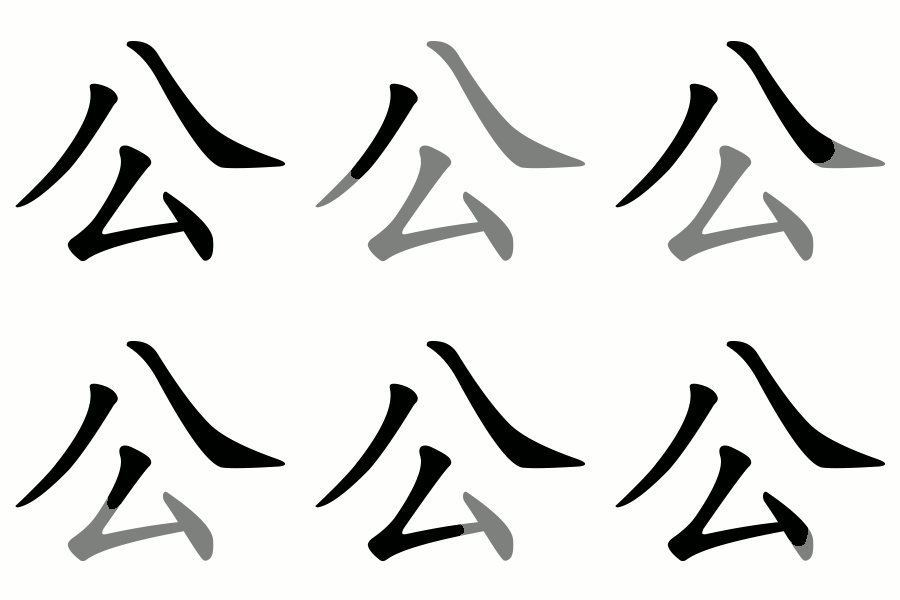
Early forms show 八 (“to divide, to separate”) above 厶 (“private, personal”). Together they signify “what is not private → what is common, public, fair.”
Thus, 公 originally contrasted with 私 (“private”), carrying the sense of impartiality, fairness, openness, and by extension, “official, public.”
Usage in Korean
公平 (공평) — fairness, impartiality
公正 (공정) — just, righteous
公務 (공무) — public duty, official affairs
公共 (공공) — public, communal
公園 (공원) — public park
公文 (공문) — official document
公認 (공인) — official recognition, authorization
Additional notes
In classical Chinese thought, 公 often embodies the Confucian ideal of justice without bias, contrasted with 私 (private interest, selfishness).
The title 公 was also a noble rank in ancient China (equivalent to “duke”).
In modern East Asian languages, 公 appears in countless compounds meaning “public” or “official,” and it remains central to ideas of fairness and the common good.
- 金戈 (CI)
- ⿱ 八 厶
Neighboring characters in the dictionary
