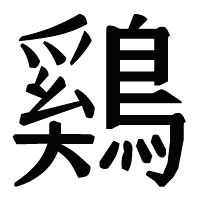
鷄
- chicken;
- rooster;
Etymology
A phono-semantic compound:
鳥 (조, “bird”) — provides the meaning (a type of bird)
奚 (해, “how/what”) — provides the pronunciation
The character literally denotes a specific kind of bird, namely the domestic chicken.
In oracle bone script (甲骨文), the character already depicted a chicken.
Usage in Korean
계란 (鷄卵) — egg
계육 (鷄肉) — chicken meat
양계 (養鷄) — poultry farming
닭띠 (鷄띠) — the Year of the Rooster (zodiac)
Additional notes
鷄 is the 10th animal of the East Asian zodiac.
It symbolizes:
- dawn and vigilance (rooster crowing)
- punctuality
- awakening and alertness
In classical East Asian culture, the rooster’s crow was associated with:
- driving away darkness
- moral vigilance
- proper daily order
Related characters:
鳥 — bird
鳳 — phoenix
鴨 — duck
鴻 — wild goose
卵 — egg
鷄 is one of the basic characters taught in HSK Level 1 (beginner Chinese proficiency).
While it primarily means “chicken,” it is also used euphemistically in Chinese to refer to the male genitalia, instead of the vulgar word 屌.
Alternative forms
雞 (U+96DE) is a variant form using 隹 (짧은 꼬리 새, small bird) as the semantic component.
In Taiwan, Hong Kong, and other regions using traditional characters, 雞 is the standard form.
Words that derived from 鷄
- 月大竹日火 (BKHAF)
- ⿰ 奚 鳥