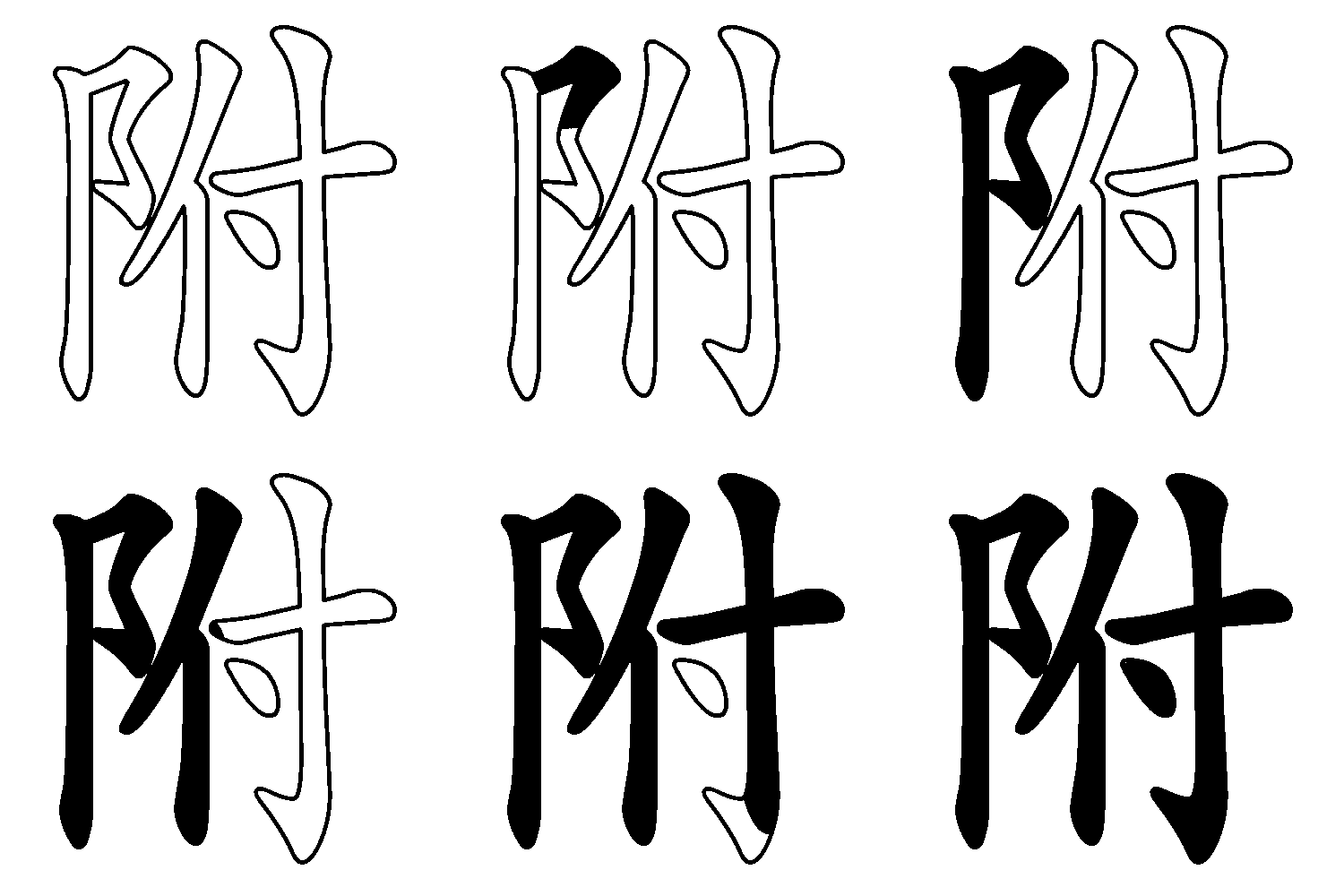
附
- to attach;
- to adhere to;
- to append;
Etymology
A phono-semantic compound consists of:
阜 (mound; hill) — semantic component, often associated with places, structures, or physical attachment;
付 (to hand over) — phonetic component, supplies pronunciation "bu" and supports the meaning of “handing over/attaching.
The original sense suggests "something placed against or attached to a mound or structure," which later generalized into the meaning “to attach” or “to adhere.”
According to the Shuowen Jiezi (説文解字) the original meaning was “small earthen mound.” Over time, this sense was lost, and the meaning shifted to “attach, join, rely on.”
Semantic development:
- physical attachment;
- adding or appending;
- relying or depending upon;
- following or aligning with (political/social).
Usage in Korean
부속 (附屬) — attached; affiliated
부가 (附加) — to add
부기 (附記) — additional note
부착 (附着 / 附着) — adhesion
부의하다 (附議하다) — to second a motion
Additional notes
附 emphasizes attachment in a structural or relational sense affiliation or dependence.
Related characters:
付 — to hand over
依 — to rely on
属 — belong to
着 — adhere
加 — add
Among these, 附 most clearly conveys structural attachment.
Classical usage:
附庸 — dependent state; vassal
附會 — forced association; strained interpretation
依附權勢 — to rely on power and influence
- 弓中人木戈 (NLODI)
- ⿰ 阝 付