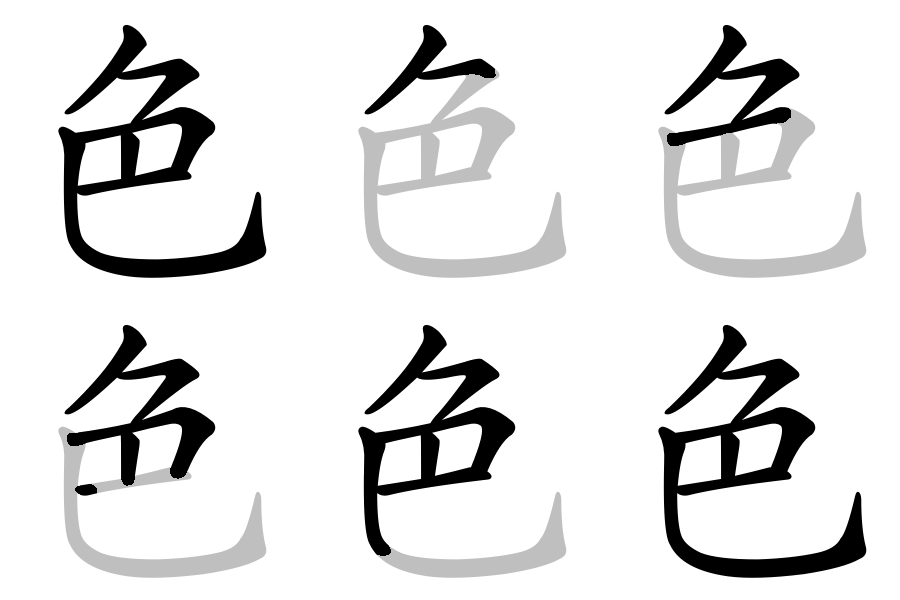
色
- colour, hue;
It also carries meanings related to "light," "coloration," and "sexual desire" (as in 색정, 色情).
Etymology
There are several theories about the origin of this character’s form:
1. It is a pictograph derived from the image of two people (a man and a woman) engaging in sexual intercourse. The meaning of "light" or "color" is thought to come from the reddening of their faces during this act.
2. It is a phono-semantic compound combining 人 (person) and 㔾 (a shape representing kneeling), symbolizing how a person's mind and complexion align—hence the meanings of "complexion" and "color."
3. It was originally like the character 絶, formed by a knife and a person kneeling, meaning "to cut off" or "to observe someone's complexion and act accordingly," and later the meanings diverged.
Usage in Korean
The single character 色 is often used to mean "color," "light," or "complexion," but it can also imply lewdness or sexual desire. For example, sexual desire is sometimes called 色慾 in Chinese characters.
Very few characters use this radical, and even those characters are rarely used, so its presence as a radical is quite minor. Among the somewhat more commonly used characters is 艶 (meaning "beautiful" or "glossy"), but this character originally did not include 色 and was simplified later, so its etymology is unrelated to the color radical.
- 弓日山 (NAU)
- ⿱ ⺈ 巴