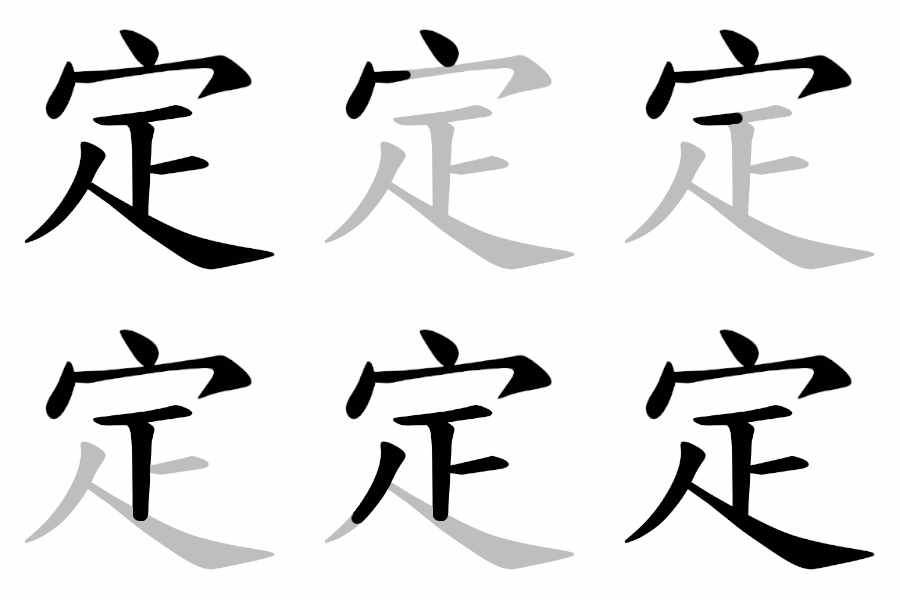
定
- to decide;
- to settle;
- to determine;
Etymology
Phono-semantic compound:
宀 (면) – represents a roof or house, symbolizing a place of stability;
正 (정) – phonetic component, provides the sound “정.”
Originally, the character carried the sense of “making something stable and fixed within a space (house)”, which naturally expanded to “to settle,” “to decide.”
Semantic development:
- being settled — fixed, placed properly
- mental decision — determination
- rule or standard — established norm
- stability — calmness, order (related uses)
Usage in Korean
定 is a core character in Korean, Chinese, and Japanese for decisions, settings, and establishing rules.
Common compounds:
결정 (決定) — decision; determine
정책 (政策) — policy (established plan)
정액 (定額) — fixed amount
정해지다 (定하다) — to be decided
확정 (確定) — to finalize; confirm
안정 (安定) — stability
설정 (設定) — setting, configuration
Set phrases:
마음이 정해지다 — one’s mind is made up
정해진 규칙 — fixed rules
Additional notes
- 十一卜人 (JMYO)
- ⿱ 宀 𤴓