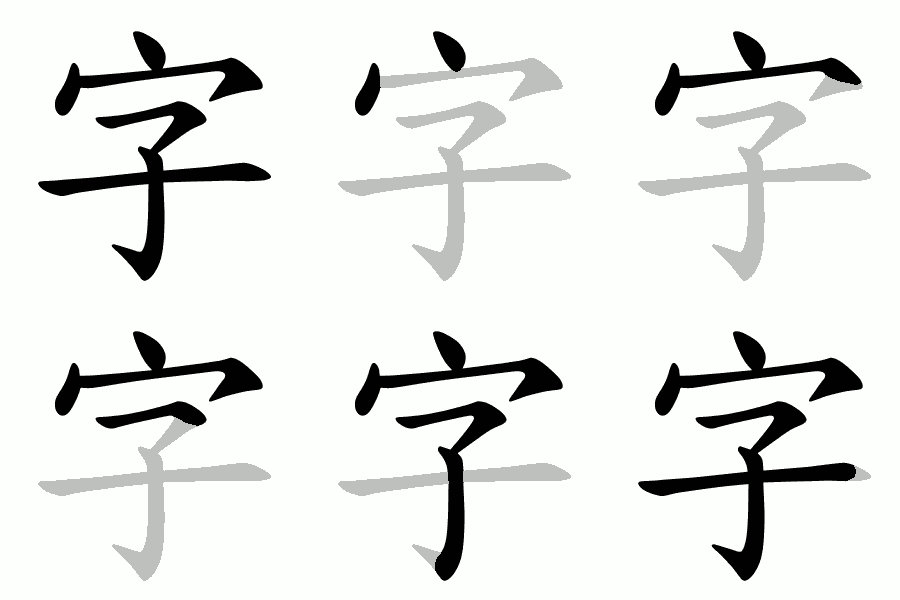
字
- character;
- letter;
- name;
Etymology
Phono-semantic compound:
宀 (집 면) – meaning component, representing a house;
子 (아들 자) – sound component, also contributes meaning (child).
Original sense was “to give birth to a child.” By the Han dynasty, 字 was borrowed to mean “written character.”
Over time, it broadened to mean “letter, character” and also carried the sense of “name” — which is why it appears in compounds like 文字 (문자) and terms for style names in classical usage.
Semantic development:
- naming a child — giving identity
- named symbols — characters with fixed forms
- writing system unit — letters / characters
- onomastic use — courtesy name (style name)
Usage in Korean
字 is a core, high-frequency character across all registers.
Common compounds:
문자 (文字) — written characters; script
한자 (漢字) — Chinese characters
철자 (綴字) — spelling
자형 (字形) — character form
자음 (字音) — pronunciation of a character
Classical / cultural usage:
자호 (字號) — style name and pen name
이름자 (名字) — given name (character-based)
Additional notes
Unlike 文 (writing, culture), 字 focuses on individual units rather than text as a whole.
Cultural & linguistic notes:
In Classical Chinese, 字 commonly referred to a courtesy name given at adulthood (e.g., 자, 字 vs 명, 名).
In Modern Chinese, 字 (zì) is the everyday word for “character”:
写一个字 — write one character
生字 — unfamiliar character
Related characters (writing & names):
文 — writing; script; culture
名 — name
號 — style name; pseudonym
書 — writing; book
詞 — word
Among these, 字 uniquely denotes the atomic unit of written language.