鬱
- dense (as forest);
- luxuriant;
- gloomy;
Etymology
Compound ideograph with phonetic influence (complex structure).
Originally connected with the idea of:
- dense, flourishing vegetation;
- thick growth blocking light.
Primary early meaning "lush, thick, flourishing forest."
Semantic development:
- luxuriant / lush;
- thick and dark;
- stagnant / blocked;
- emotional depression.
Usage in Korean
울창 (鬱蒼) — thick and luxuriant
우울 (憂鬱) — depression; melancholy
울적 (鬱積) — emotional accumulation
Additional notes
鬱 conveys:
- density;
- obstruction;
- emotional pressure.
Its evolution from "thick forest growth" to "psychological heaviness" beautifully illustrates how Chinese characters often move from concrete nature imagery to abstract emotional states.
Among commonly used characters, one of the most complex.
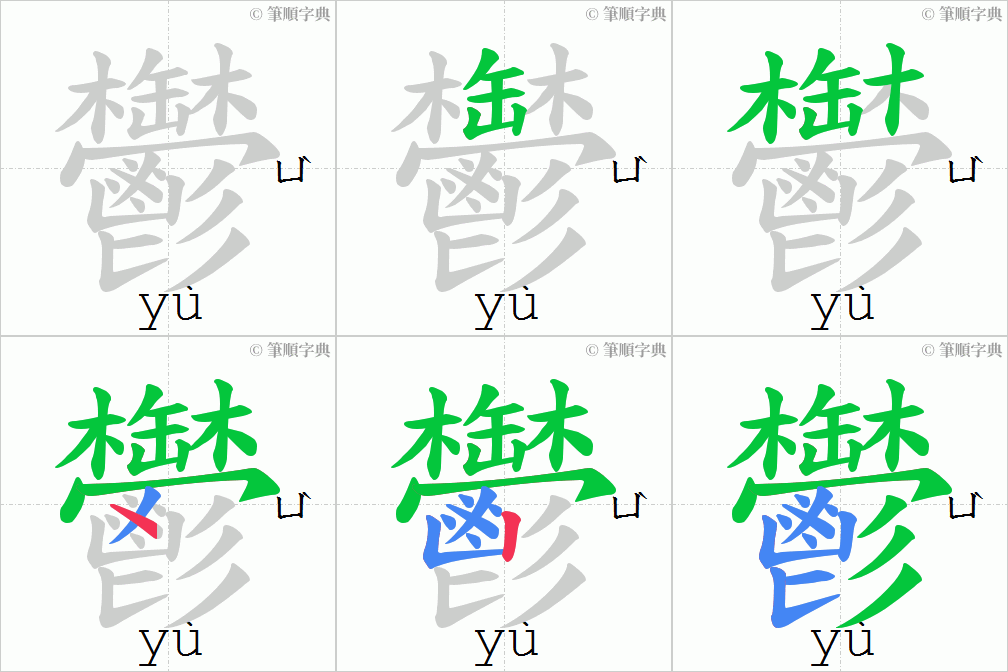
鬱
답답할
울
dapdaphal
ul
Kangxi radical:192, 鬯 + 19
Strokes:29
Unicode:U+9B31
Cangjie input:
- 木木月山竹 (DDBUH)
Composition:
- ⿳⿲ 木 缶 木 冖 ⿰ 鬯 彡

The content on this page provided under the CC BY-NC-SA license.