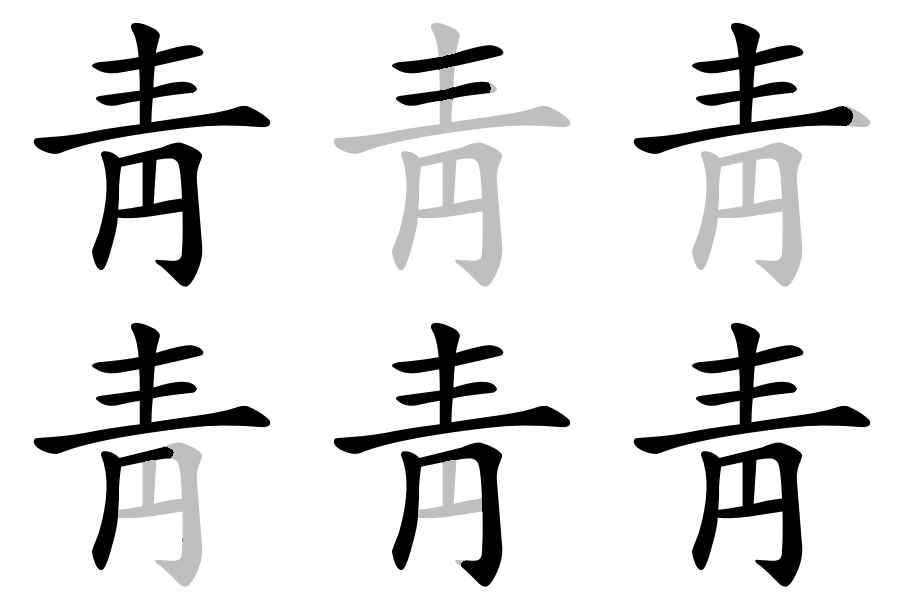
靑
- blue, azure, green;
- young;
- calm, serene;
Etymology
This character 靑 (날 생 + 丹 붉을 단) is composed of 生 ("to live" or "to grow") and 丹 (meaning cinnabar, a bright red mineral pigment, but here likely representing a color element).
The character is either seen as a phono-semantic compound with 生 as the phonetic component, or as an ideogram symbolizing the fresh green color of a sprouting plant.
Originally, it meant the greenness of plants — the fresh, vibrant color of new growth. Over time, 靑 came to encompass both blue and green colors.
靑 historically denotes a range of colors from green to blue, with context and language influencing its exact meaning.
Usage in Korean
In modern Chinese, when used as a color name, 靑 typically means "cyan" or "blue-green."
In Cantonese, it can also mean "light green."
Like in classical Chinese, the character covers both blue and green hues.
In Korean and Japanese, it generally came to mean "blue."
In China, 青 as an adjective often refers to greenish objects more than purely blue.
The character 藍 (blue-indigo) is more commonly used for pure blue in Chinese.
In Cantonese, when emphasizing green, the phrase "青BB" is used.
靑 also appears as an abbreviation in names, such as 청와대 (靑瓦臺, the Blue House, the Korean presidential residence).
Alternative forms
青 (U+9752) - Preferred form in modern Chinese and Japanese.
Characters with 靑
- 手一月中一 (QMBLM)
- ⿱ 龶 円