虎
- tiger;
Etymology
A pictographic character.
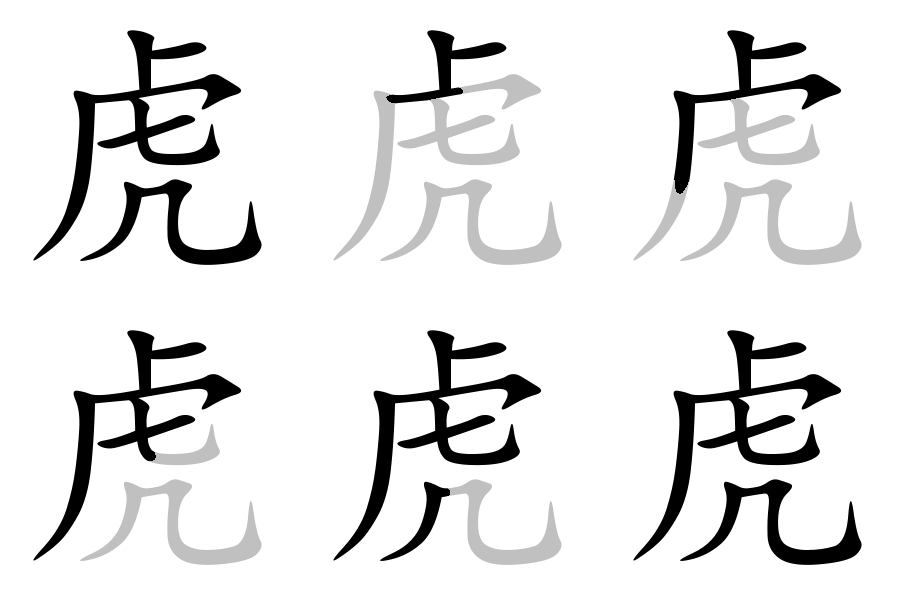
虎 originally depicts the physical form of a tiger:
The upper portion represents the tiger’s head and facial markings
The lower element 儿 represents the legs and tail, giving the impression of a standing animal
This makes 虎 one of the clearer animal pictographs in the Chinese script.
When used as a radical, the lower part is omitted, forming 虍, which appears in many characters related to fierceness, intimidation, or phonetic borrowing. In many such characters, 虍 functions primarily as a phonetic component rather than semantic.
Usage in Korean
虎 is widely used across classical and modern Sino-Korean vocabulary, often symbolizing strength, fearlessness, and danger.
Common compounds:
호랑이 (虎狼) — tiger (lit. “tiger and wolf”)
맹호 (猛虎) — fierce tiger
백호 (白虎) — white tiger (mythological guardian of the west)
호위 (虎威) — tiger’s might; intimidating power
호담 (虎膽) — tiger’s gall; bravery
Idiomatic expressions:
호랑이 굴에 가야 호랑이를 잡는다 — “To catch a tiger, one must enter the tiger’s den.”
여우 같은 지혜, 호랑이 같은 용맹 — cunning like a fox, brave like a tiger
Additional notes
In East Asian culture, 虎 is a supreme symbol of courage and authority.
In Korea especially, the tiger has long been regarded as a guardian spirit of mountains, a protector against evil, and a national symbol.
In folk belief and art, tigers often appear alongside magpies (까치호랑이), symbolizing moral satire, protection, and vigilance.
In classical philosophy and military texts, 虎 frequently symbolizes raw force, contrasted with strategic wisdom.
Related characters (power & ferocity):
狼 — wolf
豹 — leopard
猛 — fierce; violent
威 — authority; might
勇 — bravery
Among animal symbols, 虎 represents direct, overwhelming strength, in contrast to 龍 (dragon), which symbolizes cosmic or transcendent power.
Alternative forms
乕 — variant used primarily in Japanese sources
虍 — radical form (used in compounds, not standalone)
Words that derived from 虎
- 卜心竹弓 (YPHN)
- 卜心竹山 (YPHU)
- ⿸ 虍 儿 (J K T)
- ⿸ 虍 几 (G V)
Neighboring characters in the dictionary
