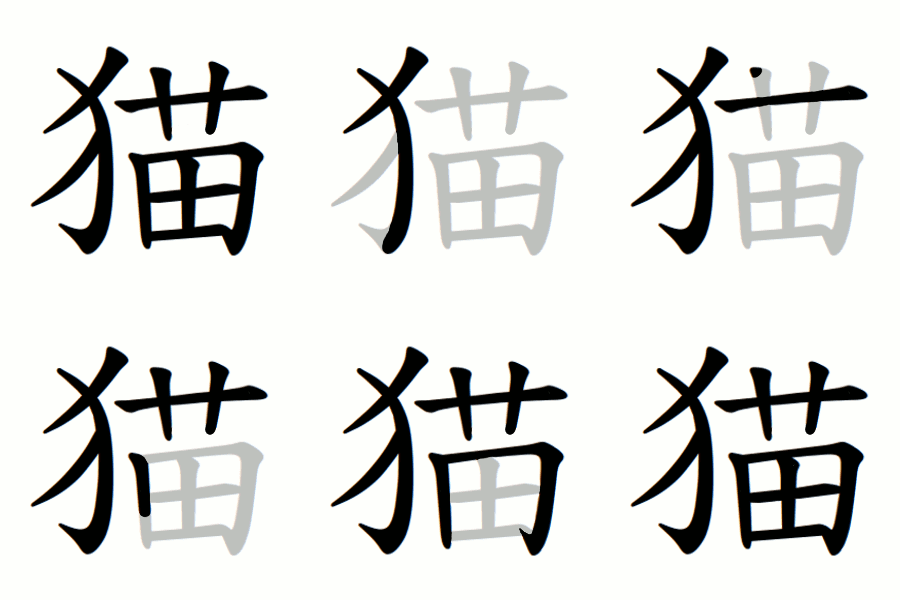
猫
- cat;
Etymology
A phono-semantic compound composed of:
犬 (dog; beast) — semantic component, a general animal radical used for mammals, especially quadrupeds.
苗 (sprout; seedling) — phonetic component, supplies the sound "myo / māo" and is traditionally understood as echoing the onomatopoeic quality of a cat’s cry (meow).
The character is thus widely believed to originate from sound symbolism, later stabilized into a regular phono-semantic form.
Usage in Korean
In Korean, 猫 is usually replaced by the native word 고양이; the Hanja appears mainly in academic or explanatory contexts.
Compounds:
묘과 (猫科) — the cat family (Felidae)
묘족 (猫族) — “cat people” (modern, informal)
Additional notes
猫 refers primarily to domestic cats, but can also include:
- wildcats
- feral or semi-wild felines, such as 삵 in Korean usage (context-dependent)
The character is neutral and descriptive, without the strong moral or symbolic weight seen in many animal-based characters.
The character 猫 is famously associated with Deng Xiaoping's (鄧小平) dictum:
흑묘백묘론 (黑猫白猫论)
“It doesn’t matter whether a cat is black or white; if it catches mice, it is a good cat.”
Here, 猫 functions as a pragmatic metaphor, symbolizing effectiveness over ideology.
Related characters:
犬 — dog
虎 — tiger
豹 — leopard
狸 — raccoon dog
獅 — lion
Among these, 猫 represents primarily a domesticated companion animal, not a symbol of power or danger.
Classical / modern usage:
猫捕鼠 — “A cat catches mice”
黑猫白猫 — “Black cat, white cat” (pragmatic effectiveness)
Alternative forms
貓 — traditional (original) form, used in Taiwan and classical texts
猫 — simplified form, now standard in Mainland China and Japan
Both forms share the same meaning; the simplification mainly affects the right component.
- 大竹廿田 (KHTW)
- ⿰ 犭 苗
Neighboring characters in the dictionary
