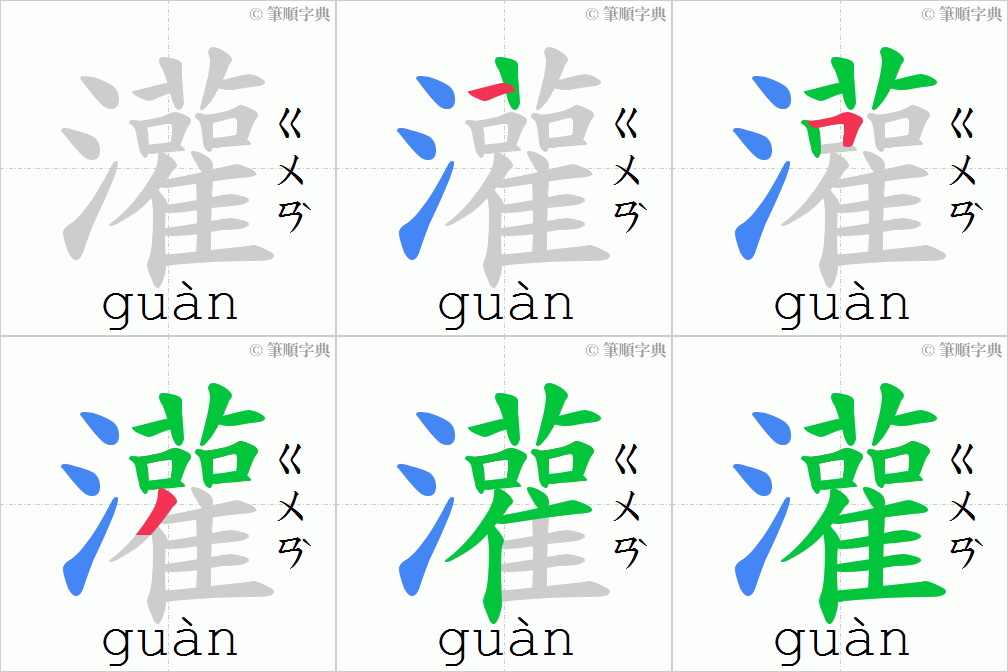
灌
- to irrigate;
- to pour;
- to fill;
- to instill;
Etymology
A phono-semantic compound consisting of:
水 (water) — semantic component, indicates connection with water or liquid;
雚 — phonetic component, supplying the sound (관 / guàn).
Originally, it referred to pouring water into fields for irrigation.
Semantic development:
- to pour water;
- to irrigate fields;
- to fill with liquid;
- to instill ideas (metaphorical).
The shift from physical irrigation to mental indoctrination reflects conceptual extension.
Usage in Korean
In Korean, 灌 appears mainly in technical vocabulary related to agriculture or medicine.
관개 (灌漑) — irrigation
주입 (注入) — to pour in; infusion
관주 (灌注) — to pour in; infusion
관수 (灌水) — watering
Additional notes
灌 emphasizes abundant pouring or systematic irrigation.
Related characters:
注 — to pour; to inject
溉 — to irrigate
水 — water
關 — phonetic relative in historical simplification
In the short-lived Second Chinese Simplification Scheme, the phonetic component 雚 was replaced with 关 (simplified form of 關), producing the simplified variant 浂.
This reform was later abandoned.
Words that derived from 灌
- 水廿口土 (ETRG)
- ⿰ 氵 雚
Neighboring characters in the dictionary
