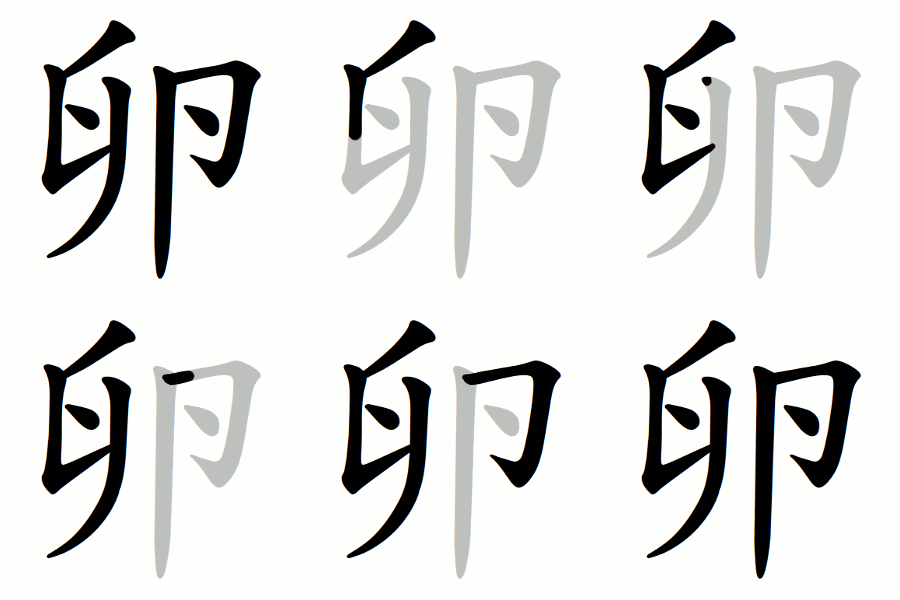
卵
- ovum;
- egg;
Etymology
An ancient pictograph:
The character depicts a cluster of eggs or fish roe, often interpreted as two eggs bound together.
The small side stroke represents the attachment or membrane.
This makes 卵 one of the clearer examples of biological imagery in early Chinese writing.
The earliest meaning of 卵 was: “egg,” “fish roe,” “something from which life emerges.”
From this, secondary meanings developed, such as:
- reproduction
- nurturing life
- being born
Although 卵 primarily means egg, classical usage allowed broader meanings:
- life in an early stage
- offspring
- to give birth / nurture (rare, classical)
Usage in Korean
In modern usage, the meaning is almost exclusively biological.
난자 (卵子) — ovum
난소 (卵巢) — ovary
어란 (魚卵) — fish roe
산란 (産卵) — egg-laying
Additional notes
卵 symbolizes potential life, origin, and beginning.
In classical texts, it is sometimes used metaphorically for fragility or undeveloped states.
By extension, can imply “to breed” or “to hatch.”
The word 난(卵) in Korean scientific terms reflects its continued importance in biology and medicine.
Alternative forms
𨳈 (U+28CC8)
Words that derived from 卵
- 竹竹尸中戈 (HHSLI)
- ⿰ 𠂑 卪